
Trezor Suite Portfolio Tracking: Echtzeit-Übersicht Ihres Vermögens mit Performance-Graphen
Ein Investor mit Bitcoin, Ethereum und mehreren Altcoins in einem Trezor-Gerät steht vor einer praktischen Herausforderung: Welcher Gesamtwert ist aktuell im Hardware-Wallet gebunden? Wie hat sich die Allokation über die letzten Monate entwickelt? In welchen Positionen sind Gewinne oder Verluste entstanden? Die Antworten auf diese Fragen sind nicht optional für professionelle Vermögensabsicherung. Sie sind notwendig für rationale Entscheidungsfindung, für Steuerberichterstattung und für das Verständnis, ob eine Investitionsstrategie funktioniert oder angepasst werden muss.
Trezor Suite bietet hierfür ein umfassendes Portfolio-Tracking-System, das Echtzeitdaten mit detaillierten Performance-Analysen verbindet. Die Anwendung zeigt nicht nur Saldo und aktuelle Kurse, sondern visualisiert auch historische Kursentwicklung, Gewinne und Verluste je Position, Vermögensverteilung über verschiedene Assets und Blockchains, sowie Metriken wie durchschnittliche Kaufpreise und Allokationsprozentuale. Der entscheidende Vorteil liegt darin, dass diese Analyse lokal stattfindet: Private Keys bleiben ausschließlich auf dem Hardware-Wallet, während die Übersichtstools auf Basis öffentlicher Blockchain-Daten und Marktpreisen funktionieren.

Die Architektur des Portfolio-Tracking-Systems
Trezor Suite trennt streng zwischen Verwaltung und Sicherheit. Die Portfolio-Tracking-Funktion basiert auf Blockchain-Abfragen und Marktdatenaggregation, während die Private Keys und Transaktionssignaturen niemals die Hardware-Wallet verlassen. Diese Architektur ermöglicht es, dass die Anwendung auf allen Plattformen verfügbar ist: als Desktop-Apps für Windows, macOS und Linux, als mobile Apps für Android und iOS, sowie als Web-Version über suite.trezor.io. Die Web-Version nutzt modernes WebUSB- und WebHID-Technologie statt der älteren Chrome-Extension, was sowohl die Sicherheit als auch die Browserkompatibilität erhöht.
Das System verfolgt Adressen und Guthaben über mehrere Blockchains hinweg: Bitcoin, Ethereum, Solana, Cardano und weitere Netzwerke werden automatisch überwacht. Für Ethereum werden zusätzlich Tausende ERC-20-Token unterstützt, für Solana entsprechend SPL-Token. Der Abgleich erfolgt durch Abfragen an öffentliche Blockchain-Knoten und Block-Explorer, nicht durch zentrale Server, die Bewegungen protokollieren würden. Wenn ein Benutzer sein Portfolio öffnet, ruft Trezor Suite die aktuellen Guthaben, Transaktionshistorien und aktuellen Marktpreise ab und berechnet daraus alle visualisierten Metriken lokal im Client.
Dieses Design hat eine wichtige Konsequenz: Die Daten sind so aktuell, wie die abgerufenen Preise. Bei hoher Marktvolatilität können Zwischenpreise in der Darstellung etwas hinter der Börsen-Realzeit zurückbleiben. Das ist ein akzeptabler Trade-off gegen die Alternative, zentrale Datenbanken zu nutzen, die Informationen über jede Wallet-Adresse, jeden Saldo und jede Transaktion sammeln würden. Ein Benutzer, der sein Portfolio verwalten möchte, kann die Suite jetzt herunterladen und sich sofort mit seinem Trezor-Gerät verbinden.
Die Unterstützung für Hardware-Geräte erstreckt sich auf Trezor Model T, Safe 3, Safe 5 und Safe 7, alle via USB oder drahtlos über Bluetooth erhältlich. Diese Vielfalt bedeutet auch, dass Portfolio-Tracking für verschiedene Benutzer verfügbar ist: vom anfänglichen Investor mit einem günstiger Model T bis zum institutionellen Benutzer mit fortgeschrittenen Kontrollen und größerem Display.
Performance-Graphen und historische Kursentwicklung
Die wohl visuellste Komponente des Portfolio-Tracking sind die Performance-Graphen. Trezor Suite zeigt nicht nur den aktuellen Vermögenswert, sondern auch, wie dieser Wert über verschiedene Zeiträume hinweg schwankte. Ein Benutzer kann Tages-, Wochen-, Monats- oder Jahresansichten auswählen und sieht unmittelbar, in welchen Perioden sein Gesamtvermögen gewachsen oder gefallen ist. Diese Graphen basieren auf historischen Marktpreisen der unterstützten Assets, nicht auf subjektiven Prognosen oder Analysen.
Für einzelne Positionen ist diese historische Sicht noch wichtiger. Ein Bitcoin, das vor zwei Jahren erworben wurde, lässt sich mit seinem durchschnittlichen Kaufpreis (Cost Basis) vergleichen. Der Graph zeigt dann nicht nur den aktuellen Preis, sondern auch wie weit dieser über oder unter der ursprünglichen Position liegt. Ein Ethereum-Bestand kann separat betrachtet werden, zusammen mit der Kursentwicklung von Ethereum in denselben Zeiträumen. Diese Trennung nach Asset erlaubt es, Portfolio-Allokation rational zu überprüfen: Welche Position hat am meisten zum Gesamtgewinn oder -verlust beigetragen?
Die zeitliche Flexibilität ist hier strategisch. Ein Investor, der eine längerfristige Position hält und kurzfristige Volatilität ignorieren möchte, kann auf die Jahresansicht wechseln. Ein aktiver Trader, der tägliche Kursbewegungen verfolgt, wird die Tagesansicht bevorzugen. Alle diese Views sind sofort verfügbar, ohne dass separate Tools oder externe Dienste nötig wären. Das bedeutet auch, dass keine Metadaten über die betrachtete Portfolio-Zusammensetzung an externe Server übertragen werden.
Gewinn- und Verlustberechnung auf Basis tatsächlicher Transaktionen
Ein häufiges Problem bei dezentralen Wallets ist, dass Gewinn- und Verlustberechnungen schwierig sind. Trezor Suite löst dies, indem es alle Transaktionen in der Wallet-Historie verfolgt und daraus den durchschnittlichen Kaufpreis und realisierte sowie unrealisierte Gewinne berechnet. Das funktioniert nach einem einfachen, aber genauen Modell: Für jede Einnahme einer Münze wird der Preis zum Zeitpunkt der Transaktion (oder des Erhalts) als Cost Basis verwendet. Der aktuelle Preis wird gegen diese Basis verglichen.
Das System unterscheidet zwischen realisierten und unrealisierten Gewinnen. Ein realisierter Gewinn entsteht, wenn eine Münze verkauft oder getauscht wird – zu einem höheren Preis als sie gekauft wurde. Ein unrealisierter Gewinn besteht, wenn eine Münze noch in der Wallet ist, deren Marktwert aber höher ist als die durchschnittliche Cost Basis. Diese Unterscheidung ist nicht nur akademisch; sie ist zentral für Steuerberichterstattung in vielen Jurisdiktionen, wo nur realisierte Gewinne unmittelbar steuerpflichtig sind.
Die Berechnung erfolgt automatisch, ohne dass der Benutzer manuell Transaktionen eingeben muss. Dies ist besonders wertvoll, wenn ein Portfolio über Monate oder Jahre hinweg gewachsen ist und viele Käufe, Verkäufe, Swaps oder Transfers stattgefunden haben. Ein Portfolio mit 50 separaten Transaktionen manuell zu analysieren wäre anfällig für Fehler. Trezor Suite aggregiert diese Daten korrekt und präsentiert sie verständlich.
Allokations- und Diversifikationsanalyse
Ein zentraler Aspekt moderner Portfolioverwaltung ist die Frage, wie Vermögen über verschiedene Assets verteilt ist. Trezor Suite visualisiert dies durch Allokationsdiagramme, die zeigen, welcher Prozentsatz des Gesamtvermögens in Bitcoin, Ethereum, Solana, Stablecoins oder anderen Assets gebunden ist. Diese Ansicht ist nicht nur ästhetisch; sie enthüllt strukturelle Risiken. Ein Portfolio, das zu 95 Prozent aus einer einzelnen Münze besteht, hat ein anderes Risikoprofil als ein diversifiziertes Portfolio mit Gewichtungen von 30, 20, 15, 15, 10, 10 Prozent.
Zusätzlich wird die Allokation nach Blockchains angezeigt. Ein Benutzer könnte 40 Prozent seines Vermögens in Bitcoin-basierten Positionen haben, 35 Prozent in Ethereum-basierten Assets, 15 Prozent in Solana und 10 Prozent in anderen Chains. Dieses Level an Granularität ermöglicht es, systematische Konzentrationsrisiken zu erkennen. Wenn eine Blockchain einen Ausfallzustand erleiden würde (was unwahrscheinlich ist, aber konzeptionell möglich), hätte dies nachvollziehbare Auswirkungen auf das Portfolio.
Die Allokationsansicht kann auch als Ausgangspunkt für Rebalancing verwendet werden. Ein Benutzer, dessen ursprüngliche Strategie eine 50/50 Bitcoin-Ethereum-Aufteilung war, kann feststellen, dass steigende Ethereum-Kurse die Position auf 35/65 verschoben haben. Trezor Suite zeigt diese Abweichung an, ohne automatisch zu rebalancieren – die Entscheidung bleibt beim Benutzer. Die integrierten Swap- und Kauf-Funktionen ermöglichen es dann, diese Adjustment durchzuführen, ohne dass der Benutzer ein externes Tausch-Programm verlassen muss.
Integration mit Kauf- und Tausch-Services
Das Portfolio-Tracking verliert an Wert, wenn eine Aktion – wie der Kauf neuer Assets oder die Neuzuweisung – mühsam wird. Daher integriert Trezor Suite Kauf- (On-Ramp) und Tausch-Funktionen direkt in die Anwendung. Ein Benutzer, der feststellt, dass Bitcoin zu untergewichtet ist, kann sein Portfolio öffnen, die Bitcoin-Allokation sehen, und direkt über Trezor Suite Bitcoin mit Fiat-Währung kaufen oder andere Coins tauschen.
Diese Integration erfolgt durch Partner-Services, denen der Benutzer bewusst Transaktionen delegiert. Der private Key verlässt das Hardware-Wallet nicht; die Transaktion wird vom Wallet aus initiiert und signiert. Dies unterscheidet sich fundamental von zentralisierten Börsen, wo die Assets in eine externe Depotbank überwiesen werden. Hier bleiben die Coins in der Kontrolle des Benutzers, und der Dienstanbieter führt nur die Orderabwicklung durch.
Für technisch versierte Benutzer sind auch manuelle Token-Swaps durch WalletConnect-Integration möglich. Dies erlaubt den Zugriff auf Dezentrale Börsen und DeFi-Protokolle, während private Keys immer noch lokal signieren und das Hardware-Wallet nicht online Speicherung verwendet. Ein Benutzer könnte etwa einen SPL-Token auf Solana direkt gegen einen anderen Coin tauschen, ohne die Wallet-Suite zu verlassen.
Staking, DeFi und NFT-Management als Portfoliokomponenten
Modernes Cryptocurrency-Management geht über statische Bestände hinaus. Trezor Suite integriert Staking für Ethereum und andere Netzwerke, DeFi-Zugang durch WalletConnect sowie NFT-Verwaltung. Diese Features erscheinen möglicherweise orthogonal zu Portfolio-Tracking, sind aber tatsächlich zentral dafür. Ein Benutzer, der Ethereum-Rewards durch Staking erhält, sieht diese Erträge in der Portfolio-Historie reflektiert. NFTs, die in der Wallet gelagert sind, können angezeigt und verwaltet werden, ohne dass ein separates Tool nötig ist.
Das Portfolio-Tracking berücksichtigt diese Komponenten in der Gesamtvermögensberechnung. Wenn 10 Ethereum gestaked sind und 5 Ethereum flüssig vorhanden sind, zeigt die Suite diese Aufteilung. Die Staking-Belohnungen werden als Transaktionen erfasst und fließen in die Gewinn-Verlust-Berechnung ein. Dies ist besonders wichtig für Benutzer, die eine aktive Rendite-Strategie verfolgen: Sie können sehen, wie Staking-Erträge und Kursbewegungen kombiniert zu ihrem Gesamtertrag beitragen.
NFT-Bestände werden separat aufgelistet, häufig mit aktuellen Marktwertschätzungen basierend auf Sekundärmarkt-Daten. Ein Portfolio mit sowohl fungiblen Tokens als auch NFTs wird daher vollständig abgebildet. Das ist kein triviales Feature, da viele Wallets NFTs ignorieren oder nur als abstrakte Adressen anzeigen. Trezor Suite versucht, diese Assets verständlich zu machen und in die Gesamtkontextualisierung des Vermögens einzubeziehen.
Sicherheitsaspekte bei Portfolio-Offenlegung und Datenschutz
Ein häufiger Bedenken bei Portfolio-Tracking ist: Wer sieht diese Daten? Trezor Suite sammelt grundsätzlich keine Log-Daten, Balancen oder Transaktionsmetadaten auf zentralen Servern. Die Web-Version verwendet moderne HTTPS-Verifizierung und WebUSB-/WebHID-Kommunikation, um sicherzustellen, dass auch Browser-basierter Zugriff auf das Hardware-Wallet kryptographisch geschützt ist. Dies schützt vor Man-in-the-Middle-Angriffen und vor Phishing-Versuchen, die versuchen würden, eine gefälschte Trezor Suite zu präsentieren.
Allerdings gibt es einen praktischen Kompromiß: Um Marktpreise und Blockchains-Daten zu erhalten, muss die Anwendung mit externen APIs kommunizieren. Dies kann bedeuten, dass eine Anfrage nach dem Saldo einer Bitcoin-Adresse an einen Block-Explorer gesendet wird. Solche Anfragen können, wenn nicht anonym gestaltet, die IP-Adresse des Benutzers mit der Bitcoin-Adresse verknüpfen. Trezor Suite begegnet diesem Risiko durch Tor-Integration und durch optionale Nutzung eigener Nodes. Ein sicherheitsbewusster Benutzer kann eine lokale Bitcoin-Node konfigurieren und diese als Datenquelle nutzen, statt auf öffentliche Services zu verlassen.
Für den typischen Benutzer ist das nicht notwendig. Die Nutzung von HTTPS und die Abfrage von öffentlichen Blockchain-Daten sind sicher, wenn auch nicht vollständig anonym. Die Kerngarantie – dass private Keys lokal bleiben und niemals übertragen werden – ist ungebrochen. Das Portfolio-Tracking ist daher ein Beispiel dafür, wie Convenience und Sicherheit im praktischen Balance-Punkt zusammenkommen. Man erhält Echtzeit-Übersicht des Vermögens, ohne die fundamentalen Kontrollen zu verlieren.
Praktische Workflows für regelmäßiges Portfolio-Management
Ein rationaler Investor nutzt Portfolio-Tracking nicht sporadisch, sondern regelmäßig. Ein typischer Workflow könnte wöchentlich sein: Wallet-Öffnung, Überprüfung der aktuellen Performance, Abgleich mit historischen Graphen, Überprüfung der Allokation und gegebenenfalls Rebalancing. Trezor Suite unterstützt diesen Rhythmus durch schnelle Zuladung und klare Visualisierung. Ein Benutzer kann innerhalb von Sekunden sehen, ob sein Bitcoin-Anteil von 40 Prozent auf 38 Prozent gefallen ist oder auf 42 Prozent gestiegen.
Für Steuerberichterstattung wird das Portfolio-Tracking noch essentieller. Zum Ende eines Steuerjahres können Benutzer ihre realen Gewinne und Verluste exportieren oder in ihren Tax-Reporting-Tools dokumentieren. Trezor Suite liefert die Transaktionshistorie mit Zeitstempeln, Preisen und berechneten Gewinnen. Dies reduziert die Notwendigkeit, manuelle Spreadsheets zu pflegen oder externe Datenquellen zu konsultieren.
Ein wichtiger Punkt ist, dass dieses Management lokal stattfindet, auch offline verfügbar ist (für die historischen Daten) und nicht in Cloud-Speichern endet. Ein Benutzer, der seine Portfolio-Analyse auf einem Desktop-Computer durchführt, verlässt sich nicht auf Daten, die irgendwo in einem zentralisierten System gehostet werden. Dies ist nicht nur ein Datenschutz-Feature, sondern auch ein Verfügbarkeits-Feature: Unabhängig vom Status extern gehosteter Services kann der Benutzer sein Portfolio überprüfen.
Häufig gestellte Fragen
Wie aktuell sind die Portfolio-Daten und Performance-Graphen in Trezor Suite?
Die Daten sind so aktuell wie die letzten abgerufenen Blockchain-Daten und Marktpreise. Bei der Web-Version oder Desktop-App erfolgt ein Abgleich beim Öffnen oder manuellen Refresh. Die mobilen Apps können bei Bedarf aktualisiert werden. Marktpreise werden von mehreren Quellen aggregiert, können aber bei extremer Volatilität um Minuten hinter Live-Kursen zurückbleiben. Private Keys werden niemals übertragen; die Aktualisierung betrifft nur Saldo- und Preisdaten.
Speichert Trezor Suite meine Portfolio-Daten auf zentralen Servern?
Nein. Trezor Suite berechnet Portfolio-Metriken lokal im Client auf Basis öffentlicher Blockchain-Abfragen und Marktpreisen. Es werden keine Informationen über Adressen, Guthaben oder Transaktionen zentral protokolliert. Allerdings können IP-Adressen bei der Kommunikation mit Block-Explorern sichtbar sein. Für maximale Privatsphäre können Benutzer eine lokale Node konfigurieren oder Tor-Integration nutzen.
Kann ich in Trezor Suite mein Portfolio automatisch rebalancieren?
Nein, das Rebalancing ist nicht automatisiert. Trezor Suite zeigt die aktuelle Allokation und Abweichungen von Zielgewichtungen an. Der Benutzer kann dann manuell Swaps durchführen oder neue Assets kaufen, um die Allokation zu korrigieren. Dies wahrt die bewusste Kontrolle über Portfolio-Entscheidungen und vermeidet unerwartete Transaktionen.
- Published in Uncategorized
Why a Multi-Chain Wallet Is Also a Security Decision
What if the most dangerous moment in DeFi is not when a protocol is hacked, but when a user approves a transaction that looks ordinary? Consider a US-based investor moving between an Ethereum lending market, a layer-2 exchange, and a token bridge during a busy afternoon. The assets may sit on different networks, yet the human error is the same: the user sees a familiar token name, clicks quickly, and fails to understand what the wallet is authorizing.
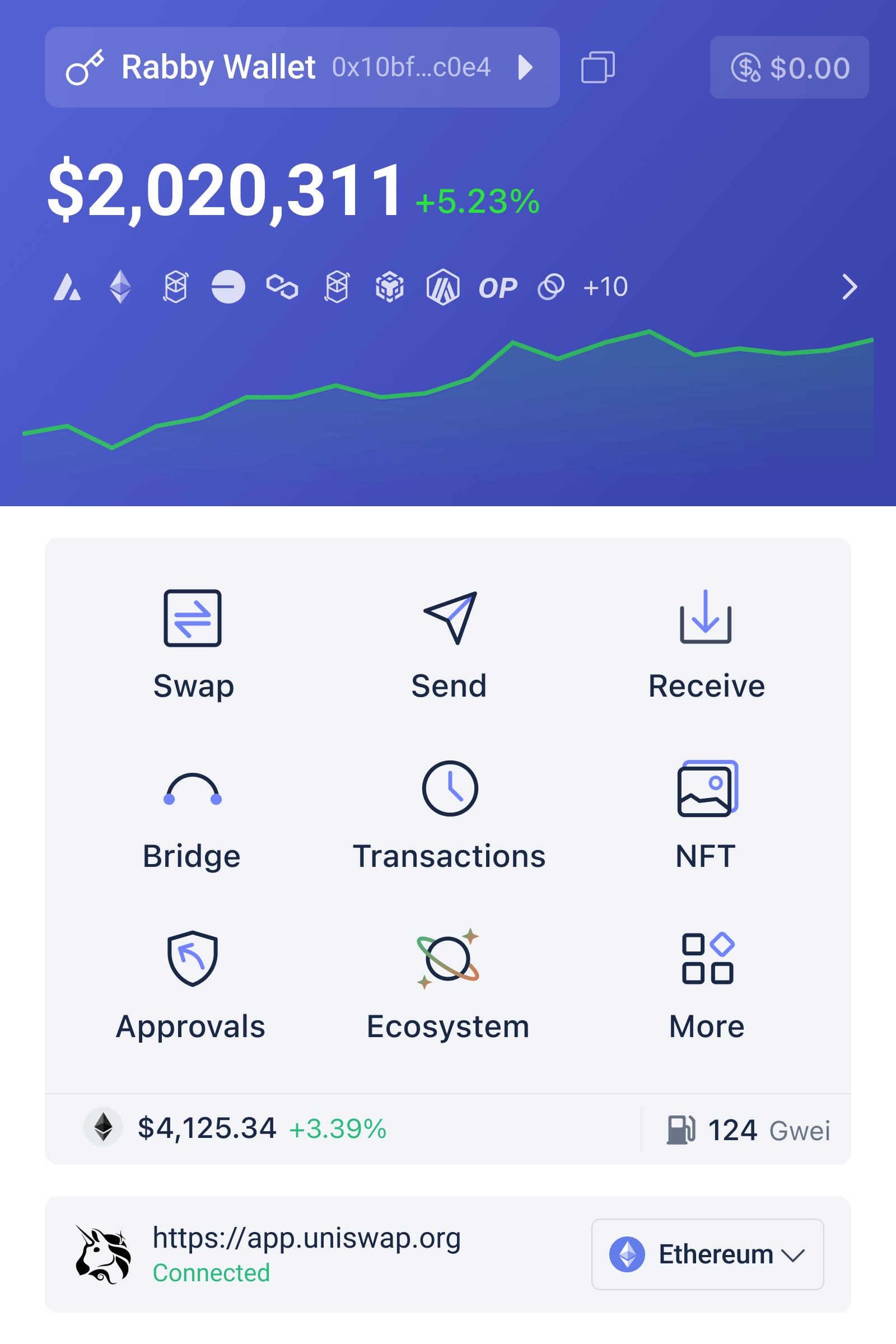
This is where a multi-chain wallet such as Rabby becomes interesting. Its value is not simply that it holds assets across several networks. The deeper proposition is that a wallet can act as an interpretation layer between a decentralized application and the person signing. That can improve decision-making—but it cannot make an unsafe protocol safe, reverse a malicious approval, or protect a user who ignores every warning. Security begins with the wallet, but it does not end there.
The case: one user, three networks, four different risks
Imagine Maya, who keeps a long-term position in a hardware wallet but uses a browser wallet for smaller, active DeFi transactions. She connects to a decentralized exchange on one network, supplies collateral to a lending protocol on another, and later moves funds through a bridge. From her perspective, this is one portfolio. Technically, it is a collection of separate environments, each with its own chain state, gas token, contracts, fee market, and failure modes.
A multi-chain wallet helps organize that complexity by presenting accounts and networks within one workflow. It can reduce the friction of switching between applications and chain-specific settings. That matters because operational mistakes—using the wrong network, sending an asset to an incompatible address, or overlooking a fee requirement—often arise from context switching rather than from sophisticated attacks.
Rabby is designed for browser-based DeFi use and is commonly considered by users who want more transaction context than a minimal signing prompt provides. Before installing any wallet, a user should verify the source, check the requested browser permissions, and protect the recovery phrase offline. Readers who are evaluating the installation process can review the rabby wallet extension guide, while independently confirming that the download path and software details are authentic.
The important distinction is between visibility and protection. A wallet may identify the destination contract, display expected asset changes, or flag a potentially risky interaction. These signals can make a transaction easier to reason about. They do not prove that the underlying protocol is solvent, that a token will retain value, or that a smart contract has no undiscovered vulnerability. A warning system is an aid to judgment, not a substitute for judgment.
How transaction security works at the signing point
When a user clicks “confirm,” the wallet is not merely transferring money. It may be signing a message that grants a contract permission to move tokens later, calls several contracts in sequence, or changes a position in a lending or derivatives protocol. The visible button on a website can therefore be a poor description of the actual authority being granted.
This is a useful mental model: treat every signature as a capability. A capability is a permission that allows some future action, within defined limits, by a particular address or contract. A token approval, for example, may authorize a smart contract to spend an amount on the user’s behalf. If that permission is broader than necessary, the risk remains even after the original transaction appears complete.
Wallet-level warnings are most helpful when they narrow the gap between the website’s language and the blockchain’s mechanics. They may encourage a user to inspect the contract, notice a suspicious recipient, or reconsider an unexpected asset change. In practice, the quality of the decision still depends on what the wallet can decode, what the application exposes, and whether the chain or contract uses conventions that the wallet recognizes.
That last condition is a real boundary. DeFi is not a single standardized environment. New chains, custom contracts, upgradeable systems, aggregator routes, and complex signature schemes can make interpretation incomplete. A transaction that is clearly displayed is not necessarily economically safe, and a transaction that is poorly displayed is not necessarily malicious. Users should be especially cautious when a wallet cannot explain the outcome in plain terms.
Rabby compared with other wallet arrangements
Minimal browser wallets
A conventional browser wallet can be a straightforward choice for users who value broad application compatibility and a familiar signing flow. Its simplicity may be an advantage: fewer layers can mean fewer interface decisions. The trade-off is that a minimal prompt can leave more investigative work to the user. If someone interacts with many protocols across several networks, the cost of that missing context can become material.
Hardware wallets
Hardware wallets provide a different kind of defense by keeping key operations isolated from an ordinary browser environment. They are generally better suited to long-term holdings and high-value accounts. Yet hardware security does not automatically clarify what a user is signing. A person can still approve a malicious contract, especially when transaction data is difficult to interpret on a small device. The strongest arrangement for many users is layered: a hardware wallet for storage and a separate active wallet for limited DeFi exposure.
Custodial platforms
A US user who keeps funds on a regulated or centralized platform may gain account recovery options and a familiar customer-support model. That convenience comes with counterparty risk: the platform controls the withdrawal process, may restrict access, and creates dependence on its operational and compliance decisions. Self-custody removes that intermediary but transfers responsibility for keys, approvals, network selection, and recovery to the user.
These options are not ranked on one universal security scale. They protect against different threats. A browser wallet can reduce some signing confusion; a hardware wallet can reduce key-exposure risk; a custodial platform can reduce the burden of recovery. The correct comparison is not “which wallet is safest?” but “which failure am I trying to make less likely, and what new failure does that choice introduce?”
Installation is part of the threat model
People often treat installation as a neutral first step, but it is itself a security event. A fake extension can request access to browsing activity, imitate a legitimate wallet, or capture a recovery phrase. The safest workflow is deliberately unexciting: use a trusted project channel, verify the extension identity and permissions, create or import a wallet only in the intended environment, and never enter a recovery phrase into a website, chat, form, or support message.
Separate accounts by purpose. A “hot” account used for testing a new protocol should not hold the same balance as an account used for savings. On a multi-chain wallet, this separation is particularly useful because the interface can make many networks feel like one seamless account. Seamlessness is convenient, but it can also hide how widely risk is distributed. A compromised approval on one chain does not mean every chain is compromised, yet a stolen private key can expose every account controlled by that key.
Users should also inspect allowances periodically and revoke permissions they no longer need, using a trustworthy tool and the correct network. Revocation can require gas and is not a universal cure: it does not recover already-stolen funds, repair a vulnerable protocol, or protect against a fresh approval. Still, reducing dormant permissions limits the number of contracts that can act on an account without a new decision.
What to watch as multi-chain use grows
The likely direction of wallet design is toward more transaction explanation: clearer simulations, better contract labeling, stronger phishing detection, and interfaces that show a proposed state change rather than a block of technical data. If those tools become more reliable, they could shift security from “read the raw transaction” toward “compare the intended outcome with the expected outcome.” That would be meaningful for non-specialists.
The conditional point is important. Better interfaces will help only if their data is timely, their decoding covers the relevant contracts, and users understand uncertainty. Attackers can adapt by using familiar-looking applications, routing transactions through legitimate infrastructure, or exploiting decisions that appear economically reasonable. The next generation of wallets may therefore improve visibility without eliminating social engineering or protocol risk.
For Maya, the practical framework is simple: use a wallet that gives enough context to question a transaction, keep exposure proportional to what she can afford to lose, separate long-term storage from experimentation, and pause whenever the expected result is unclear. A multi-chain wallet is not a safety blanket. It is closer to a dashboard in a complicated vehicle: valuable because it exposes information, but unable to choose the road or prevent the driver from making a bad turn.
Frequently Asked Questions
Is Rabby safer than every other crypto wallet?
No wallet is safest for every use. Rabby may be useful for active, multi-network DeFi because transaction context and network organization can support better decisions. A hardware wallet may be more appropriate for long-term holdings, while a custodial platform may offer easier recovery. Security depends on the threat, the user’s habits, and the applications involved.
Can a wallet warning guarantee that a DeFi transaction is safe?
No. Warnings and simulations can identify suspicious patterns or clarify likely outcomes, but they depend on available data and supported contract behavior. They cannot guarantee that a protocol will function as promised, that a token has liquidity, or that an undiscovered vulnerability does not exist.
Should a beginner use one wallet for all crypto activity?
Usually, separating roles is more prudent. A limited-balance wallet can be used for experimentation and routine DeFi activity, while a higher-value account is kept offline or used rarely. The arrangement adds management overhead, but it limits the damage caused by one mistaken approval or compromised application.
- Published in Uncategorized
a16z generative ai
Hippocratic AI raises $141M to staff hospitals with clinical AI agents
Story Partners with Stability AI to Empower Open-Source Innovation for Creators and Developers

Meanwhile, Kristina Dulaney, RN, PMH-C, the founder of Cherished Mom, an organization dedicated to solving maternal mental health challenges, helped to create an AI agent that’s focused on helping new mothers navigate such problems with postpartum mental health assessments and depression screening. The startup was initially focused on creating generative AI chatbots to support clinicians and other healthcare professionals, but has since switched its focus to patients themselves. Its most advanced models take advantage of the latest developments in AI agents, which are a form of AI that can perform more complex tasks while working unsupervised. Despite rapid advancements in AI, creators in open-source ecosystems face significant challenges in monetizing derivative works and securing proper attribution.
Story, the global intellectual property blockchain, has announced its integration with Stability AI’s state-of-the-art models to revolutionize open-source AI development. This collaboration enables creators, developers, and artists to capture the value they contribute to the AI ecosystem by leveraging blockchain technology to ensure proper attribution, tracking, and monetization of creative works generated through AI. Andreessen Horowitz, or a16z, is investing in AI and biotech to lead the way in innovation.
Your vote of support is important to us and it helps us keep the content FREE.
In a statement, Raspberry AI said the funding would be used to accelerate its product development and add top engineering, sales and marketing talent to its team. But with U.S. companies raising and/or spending record sums on new AI infrastructure that many experts have noted depreciate rapidly (due to hardware/chip and software advancements), the question remains which vision of the future will win out in the end to become the dominant AI provider for the world. Or maybe it will always be a multiplicity of models each with a smaller market share? That’s followed by more extensive evaluations and safety assessments by an extensive network of more than 6,000 nurses and 300 doctors, who will confirm that it passes all required safety tests.

Once the AI agent is up and running, the clinicians who created it will be able to claim a share of the revenue it generates from the startup’s customers. Currently the technology is being used by Under Armour, MCM Worldwide, Gruppo Teddy and Li & Fung to create and iterate apparel, footwear and accessories styles. The company’s existing investors Greycroft, Correlation Ventures and MVP Ventures also joined in the round, along with notable angel investors, including Gokul Rajaram and Ken Pilot. Clearly, even as he espouses a commitment to open source AI, Zuck is not convinced that DeepSeek’s approach of optimizing for efficiency while leveraging far fewer GPUs than major labs is the right one for Meta, or for the future of AI.
Raspberry AI secures 24 million US dollars in funding round
Story is the world’s intellectual property blockchain, transforming IP into networks that transcend mediums and platforms, unleashing global creativity and liquidity. By integrating Stability AI’s advanced models, Story is taking a significant step toward building a fair and sustainable internet for creators and developers in the age of generative AI. Hippocratic AI said it’s necessary to have clinicians onboard because they have, over the course of their careers, developed deep expertise in their respective fields, as well as the practical insights to help cure specific medical conditions and the clinical workflows involved.
Investing in Raspberry AI – Andreessen Horowitz
Investing in Raspberry AI.
Posted: Mon, 13 Jan 2025 08:00:00 GMT [source]
Story aims to bridge this gap by combining Stability AI’s cutting-edge technology with blockchain’s ability to secure digital property rights. For example, creators could register unique styles or voices as intellectual property on Story with transparent usage terms. This would enable others to train and fine-tune AI models using this IP, ensuring that all contributors in the creative chain benefit when outputs are monetized.
One click below supports our mission to provide free, deep, and relevant content.
Holger Mueller of Constellation Research Inc. said Hippocratic AI is bringing two of the leading technology trends to the healthcare industry, namely no-code or low-code software development and AI agents. The launch is a bold step forward in healthcare innovation, giving clinicians the opportunity to participate in the design of AI agents that can address various aspects of patient care. It says clinicians can create an AI agent prototype that specializes in their area of focus in less than 30 minutes, and around three to four hours to develop one that can be tested. Shah said the last nine months since the company’s previous $50 million funding round have seen it make tremendous progress. During that time, it has received its first U.S. patents, fully evaluated and verified the safety of its first AI healthcare agents, and signed contracts with 23 health systems, payers and pharma clients.

For instance, one of its AI agents is specialized in chronic care management, medication checks and post-discharge follow-up regarding specific conditions such as kidney failure and congestive heart failure. The healthcare-focused artificial intelligence startup Hippocratic AI Inc. said today it has closed on a $141 million Series B funding round that brings its total amount raised to more than $278 million. “This round of financing will accelerate the development and deployment of the Hippocratic generative AI-driven super staffing and continue our quest to make healthcare abundance a reality,” he promised. Raspberry AI, the generative AI platform for fashion creatives, has secured 24 million US dollars in Series A funding led by Andreessen Horowitz (a16z). Today, we’re going in-depth on blockchain innovation with Robert Roose, an entrepreneur who’s on a mission to fix today’s broken monetary system. Hippocratic AI’s early customers include Arkos Health Inc., Belong Health Inc., Cincinnati Children’s, Fraser Health Authority (Canada), GuideHealth, Honor Health, Deca Dental Management, LLC, OhioHealth, WellSpan Health and other well-known healthcare systems and hospitals.
By incorporating this wisdom into its AI agents, it’s making them safer and improving patient outcomes, it said. Crucially, any agent created using its platform will undergo extensive safety training by both the creator and Hippocratic AI’s own staff. Every clinician will have access to a dashboard to track their AI agent’s performance and use and receive feedback for further development.

All these indicate the commitment a16z has in shaping the future of technology and healthcare through strategic investments. Both platforms use Stability AI’s models to bring creators’ visions to life and Story’s blockchain technology to enable provenance and attribution throughout the creative process. These real-world applications highlight how creators can safeguard their intellectual property while thriving in a shared creative economy. Raspberry AI offers brands and manufacturing creative teams technology solutions, which can help accelerate each stage of the fashion product development cycle to increase speed to market and profitability while reducing costs. Andreessen Horowitz, or a16z, is one of the leading AI investors and targets only innovative startups. They participated in the round that funded Anysphere on January 14, 2025, with a total sum of $105 million for an AI coding tool known as Cursor, whose valuation has reached $2.5 billion.
Onyxcoin (XCN) Market Trends and Ozak AI’s Contribution to AI-Driven Blockchain
In order to ensure its AI agents can do their jobs safely, Hippocratic AI says it only works with licensed clinicians to develop them, taking steps to verify their qualifications and experience first. Once clinicians have built their agents, they’ll be submitted to the startup for an initial round of testing. Through the Hippocratic AI Agent App Store, healthcare organizations and hospitals will be able to access a range of specialized AI agents for different aspects of medical care.

The startup was co-founded by Chief Executive Officer and serial entrepreneur Munjal Shah and a group of physicians, hospital administrators, healthcare professionals and AI researchers from organizations including El Camino Health LLC, Johns Hopkins University, Stanford University, Microsoft Corp., Google and Nvidia Corp. PIP Labs, an initial core contributor to the Story Network, is backed by investors including a16z crypto, Endeavor, and Polychain. Co-founded by a serial entrepreneur with a $440M exit and DeepMind’s youngest PM, PIP Labs boasts a veteran founding executive team with expertise in consumer tech, generative AI, and Web3 infrastructure. The startup has also created other AI agents for tasks like pre- and post-surgery wound care, extreme heat wave preparation, home health checks, diabetes screening and education, and many more besides. The startup said its AI Agent creators include Dr. Vanessa Dorismond MD, MA, MAS, a distinguished obstetrician and gynecologist at El Camino Women’s Medical Group and Teal Health, who helped to create an AI agent that’s focused on cervical cancer check-ins and enhancing patient education. According to the startup, the objective of these AI agents is to try and solve the massive shortage of trained nurses, social workers and nutritionists in the healthcare industry, both in the U.S. and globally.
TechBullion
The same day, a16z also led a Series A investment in Slingshot AI, which has raised a total of $40 million to create a foundation model for psychology. Those investments highlight the commitment of the group to using AI to address important issues and are also focusing on how AI can improve different industries, including healthcare and consumer services. In general, a16z is committed to supporting AI innovations that could have a profound impact on society. We are thrilled to see our models used in Story’s blockchain technology to ensure proper attribution and reward contributors,” said Scott Trowbridge, Vice President of Stability AI. Others include Kacie Spencer, DNP, RN, the chief nursing officer at Adtalem Global Education Inc., who has more than 20 years of experience in emergency nursing and clinical education. Her AI agent is focused on patient education for the proper installation of child car seats.
It participated in an Anysphere round that had the company raising $105 million on January 14, 2025, when it pushed the valuation up to $2.5 billion. Beyond this, it has also released a $500 million Biotech Ecosystem Venture Fund with Eli Lilly to place a focus on health technologies, but with the aspect of innovative applications. On the same day, they led a Series A investment in Slingshot AI, a company that’s developing advanced generative AI technology for mental health. Additionally, a16z invested in Raspberry AI to bring generative AI to the front of fashion design and production. In December 2024, they envisioned a future in which AI was used aggressively in nearly all sectors.
- The startup said its AI Agent creators include Dr. Vanessa Dorismond MD, MA, MAS, a distinguished obstetrician and gynecologist at El Camino Women’s Medical Group and Teal Health, who helped to create an AI agent that’s focused on cervical cancer check-ins and enhancing patient education.
- Andreessen Horowitz, or a16z, is one of the leading AI investors and targets only innovative startups.
- Hippocratic AI said it’s necessary to have clinicians onboard because they have, over the course of their careers, developed deep expertise in their respective fields, as well as the practical insights to help cure specific medical conditions and the clinical workflows involved.
- It says clinicians can create an AI agent prototype that specializes in their area of focus in less than 30 minutes, and around three to four hours to develop one that can be tested.
- Published in Uncategorized
Video Poker Türkiye Pazarında Oyun Tasarım Geliştirme Durumu
Video Poker konusu günümüzde popülarite elde etmektedir. Sonuç itibarıyla olarak sektör analizi için dünya ölçüsünde büyüme oranları önemli veriler sunmaktadır. Dünya ölçüsünde şans oyunları evi büyümesi 2024 verilerine göre milyar dolar rakamlara ulaşmıştır. Türkiye pazarında da bu artış oynamalarına katılımcılara tercihlerinden kaynaklanmaktadır. Önemli olan bu sebep ile teknolojik erişim kolaylığı oyunların ün kazanmasına neden olmaktadır. 2025 yılı için beklenen pazar hacmi birkaç milyar dolar seviyelerine çıkacağı görüş edilmektedir. Bu sebep ile video poker için plan geliştirme hayati öneme haizdir. Katılımcılara oynamalarına daha daha fazla seçenek sunulmaktadır.
Oyunların teknik yapısı yazılım ve rastgele sayı üreteci algoritmalara bağlıdır. Bu teknolojiler oyuncuya adil ve güvenli bir hissiyat vermektedir. Mobil cihazlarda oynamalarına uyumluluk şu anda önemli bir özellik olarak karşımıza çıkmaktadır. Geliştiriciler bu konuda sürekli iyileştirme yapmak zorundadır. Oyun deneyimi için bu sebep ile altyapı kalitesi incele edebilirsiniz önemlidir. Zbahis giriş platformlarından bir tanesi olarak örnek verilebilir ancak genel pazar için yazılım standartları farklılık gösterebilir. Sonuç şu an oyuncular güvenilir ve hızlı oyun deneyimi aramaktadırlar. Aynı eşzamanlı grafik ve ses kalitesi de katılım oranlarını etkilemektedir.
Sosyal dinamikler açısından video poker oyuncuların davranış biçimleri incelenmelidir. Jacks or better gibi varyantlar için katılımcılara özel plan tasarım gereklidir. Oyun sırasında karar verme süreçleri psikolojik faktörlerden etkilenmektedir. Risk yönetimi ve para kontrolü konuları bilinçli katılım için temel oluşturmaktadır. Türkiye pazarında oyuncular strateji geliştirme için online kaynakları kullanmaktadırlar. Bu kaynaklar arasında forumlar ve video rehberler bulunmaktadır. Sonuç olarak oyun toplulukları oyuncular arasında bilgi paylaşımını artırmaktadır. Bu durum oyunun sosyal yönünü güçlendirmektedir ve daha fazla kişinin katılımını teşvik etmektedir.
Gelecekte video poker sektöründe yapay zeka entegrasyonu beklenmektedir. Kişiselleştirilmiş oyun deneyimleri ve daha gelişmiş güvenlik önlemleri ön plana çıkacaktır. Güvenlik ve lisans konuları her zaman hayati öneme haizdir. Sorumlu oyun ilkeleri kapsamında birçok platform limit sistemi sunmaktadır. Bu konuda yazılım denetim standartları sektörde referans noktası oluşturmaktadır. Türkiye pazarında düzenleyici kurumların rolleri de önem kazanmaktadır. Oyuncular lisanslı ve denetlenen platformları tercih etmek zorundadır. Sonuç itibarıyla olarak sektörün sürdürülebilir büyümesi için güven ve şeffaflık temel gerekliliktir. Bilinçli katılım ve doğru veri ile oyun deneyimi geliştirilebilir.
- Published in Uncategorized
Trezor Suite Transaction Broadcasting Delays: Why Some Transfers Get Stuck and How to Fix Them
A user initializes their Trezor hardware wallet, installs Trezor Suite on their computer, and sends cryptocurrency to an exchange or payment address. Hours pass. The transaction appears in Trezor Suite’s history, but the receiving side shows no confirmation. The user checks the blockchain explorer and discovers the transaction is unconfirmed, with a status somewhere between “pending” and “stuck.” The hardware device itself is functioning correctly—the problem lies in transaction propagation, network congestion, or fee miscalculation at the moment the transaction was broadcast.
This scenario frustrates users who expect hardware-backed security to guarantee finality. In reality, Trezor Suite separates the security layer—private-key signing on the hardware device—from the broadcast and confirmation layer, which depends on network conditions beyond the wallet’s direct control. Understanding why transactions delay and how to recover from them requires examining fee mechanics, network state, and the replace-by-fee (RBF) tools that Trezor Suite provides to remedy the situation.

How transaction fees and mempool congestion interact
A blockchain mempool is a temporary holding area for unconfirmed transactions waiting for inclusion in a block. Miners and validators prioritize transactions by fee rate, measured in satoshis per byte (sats/B) for Bitcoin or gwei per unit of gas for Ethereum. When network demand spikes—during market volatility, large institutional moves, or protocol-level congestion—the effective fee floor rises. A transaction sent at 10 sats/B during calm conditions may confirm in minutes; the same rate during peak congestion may wait hours or days.
Trezor Suite displays a fee estimate when preparing a transaction, typically showing slow, standard, and fast options derived from network data. These estimates reflect current mempool state, not a guarantee. If a user selects the slow option during a quiet period and network demand suddenly increases before the transaction enters a block, the transaction will fall behind newer arrivals paying higher rates. The transaction remains valid; it simply loses competitive position.
The timing of fee selection is therefore critical. A user who prepares a transaction in Trezor Suite but waits two hours before confirming on the hardware device may find the fee environment has changed substantially. Custom fee entry, available in Trezor Suite’s advanced settings, allows users to override the default estimates, but this shifts responsibility to the user for monitoring current conditions. Setting a fee that was reasonable at preparation time can become unreasonable by execution time if network conditions shift.
Bitcoin and other proof-of-work networks also experience periodic difficulty adjustments that affect block production rates. A transaction sent during a difficulty spike—when fewer blocks are being produced—faces additional latency even if its fee rate is competitive. Ethereum’s dynamic base fee mechanism creates a different pattern: transaction inclusion depends on total fee (base + priority fee), and rapid demand changes can cause backlogs. Understanding these network-specific mechanics helps explain why a transaction’s delay cannot always be predicted at the moment of sending.
Why Trezor Suite’s fee estimates can diverge from reality
Trezor Suite obtains fee rate data from one or more blockchain explorers or nodes. The estimates are snapshots of mempool state at the moment they are generated. If the user opens Trezor Suite, views a transaction, and sees a recommended fee of 15 sats/B, that figure is accurate for that instant. If the user closes the application, waits two hours, and reopens it, the recommended rate may be 30 sats/B because network demand has increased. However, if the user has already prepared the transaction at the old rate and is now signing it, they are committing to the outdated fee.
This lag is particularly problematic on networks with volatile fee structures. Ethereum’s priority fees can swing from 1 gwei to 50 gwei within minutes during flash loan attacks, NFT launch frenzies, or other sudden demand spikes. A user following Trezor Suite’s standard fee suggestion at the moment of preparation may be making a transaction that will sit unconfirmed for hours if demand escalates before signing.
Trezor Suite’s fee-setting interface also requires users to understand the relationship between transaction size (in bytes) and total cost. A transaction sending 0.5 BTC is not necessarily smaller in size than one sending 0.05 BTC; it depends on the number of inputs being spent. A wallet consolidating 20 separate outputs will produce a transaction too large to fit in a block at any fee rate if the mempool is full of smaller, higher-fee-rate transactions. Users accustomed to simply clicking “send” without understanding these mechanics will be surprised when a transaction appears to hang for no obvious reason.
Detecting and diagnosing stuck transactions in Trezor Suite
The first diagnostic step is to identify the actual transaction status using a blockchain explorer independent of Trezor Suite. Copy the transaction ID (txid) from Trezor Suite and paste it into a reputable explorer for the relevant blockchain. The explorer will show the current state: unconfirmed, dropped from mempool, confirmed, or replaced. Trezor Suite’s own status indicator is helpful, but it reflects what the wallet’s connected node last reported, not necessarily the current truth.
A transaction can disappear from mempool if it remains unconfirmed for a long time (typically 72 hours for Bitcoin) and is purged to free resources. A second possibility is that the transaction was double-spent—another version with the same input but a different output succeeded in entering a block, making the original invalid. A third possibility is that the transaction is still present but genuinely low-priority and waiting its turn. The explorer will reveal which case applies by showing the transaction as “not found,” “replaced,” or “pending.”
Trezor Suite displays transaction history with status labels, but these labels update based on the wallet’s node connection. If the node is temporarily offline or out of sync, the status may appear frozen. Checking the explorer separately eliminates ambiguity. A user can also review the transaction details in Trezor Suite—specifically the fee rate—to assess whether it was competitive when sent. A transaction paying 5 sats/B during a period when the mempool median rate was 50 sats/B was always unlikely to confirm quickly, regardless of other factors.
For transactions on networks with custom backends, the situation becomes more complex. Trezor Suite allows users to configure custom Bitcoin nodes or Ethereum RPC endpoints. If the custom backend is misconfigured, unreliable, or temporarily offline, transaction status information may be inaccurate. The actual blockchain may have confirmed the transaction, but the custom backend may not yet have processed it, causing Trezor Suite to show it as pending indefinitely.
Replace-by-fee (RBF) mechanisms and when to use them
Bitcoin transactions can signal replaceability, allowing a sender to broadcast a new transaction using the same input with a higher fee. This mechanism is called replace-by-fee (RBF). Trezor Suite supports RBF for Bitcoin transactions that included this flag at creation. If a transaction is unconfirmed and was sent with RBF enabled, the user can access the original transaction in Trezor Suite and select an option to increase the fee. The wallet will create a replacement transaction, spending the same input at a higher fee rate, and ask the user to sign it on the hardware device.
Critically, not all Bitcoin transactions support RBF. If a user did not enable RBF when creating the original transaction, and that transaction is now stuck, RBF is no longer available as a recovery tool for that specific transaction. Some transactions have other mechanisms—notably child-pays-for-parent (CPFP)—but these require creating a second transaction and are slower. The implication is that users sending Bitcoin during congested periods should consider enabling RBF proactively, even if they plan to set a reasonable initial fee.
Using RBF within Trezor Suite is straightforward: open the transaction in the wallet, confirm that it is unconfirmed, and select the bump fee option. Trezor Suite will calculate a new fee that takes into account the current mempool state and the transaction’s size. The user reviews the new fee, confirms on the hardware device, and broadcasts the replacement. The original transaction will be replaced if the new one enters a block first, which is almost always the outcome because the new transaction pays more and therefore has higher priority.
One subtlety is that using RBF incrementally is often cheaper than waiting and then increasing dramatically. If a user is unsure about congestion and starts with a moderate fee, then bumps it once when conditions worsen, the total cost is typically less than setting an excessive fee from the start. However, each bump requires a hardware confirmation, so users must balance convenience against cost. For high-value transactions or time-sensitive payments, a higher initial fee is justified. For lower-value transfers with flexible timing, starting conservatively and bumping if needed is reasonable.
Ethereum, other networks, and their fee replacement approaches
Ethereum does not use RBF in the Bitcoin sense. Instead, Ethereum allows transaction replacement through a simpler mechanism: sending a new transaction with the same nonce (transaction sequence number) and a higher total fee will cause miners to prioritize the new version. However, this mechanism differs from Bitcoin’s RBF because Ethereum’s mempool is less uniform and miner behavior is less standardized. Some mining pools and sequencers may include both versions, or the original may confirm before the replacement is broadcast.
Trezor Suite supports fee acceleration on Ethereum by allowing users to resend a transaction with the same nonce and a higher fee. The process is similar to Bitcoin’s RBF: select the transaction, request a fee bump, confirm the new parameters on the hardware device, and broadcast. The wallet handles nonce management automatically, reducing the risk of user error. However, if a transaction has already been included in a block, attempting to resend with the same nonce will fail.
Other networks have their own congestion models and fee mechanisms. Litecoin, like Bitcoin, supports RBF. Ethereum-compatible Layer 2 networks like Arbitrum and Optimism have much lower fees and faster confirmation but different fee structures based on calldata costs. Polygon has its own gas mechanics. Trezor Suite abstracts some of these differences through its UI, but users should understand that the underlying fee dynamics vary significantly. A strategy that works on Bitcoin—starting with a conservative fee and bumping if necessary—may not be optimal on a Layer 2 network where fees are predictable and confirmation is near-instant.
Preventing delays through better fee management practices
The most effective prevention is to use real-time fee rate information when preparing transactions. Rather than trusting an estimate from hours earlier, check current conditions immediately before signing on the hardware device. Trezor Suite can be refreshed to pull the latest fee data from its configured blockchain source. A user preparing a transaction, then waiting to sign it later, should refresh the fee estimate to account for any change in network conditions.
Custom fee entry is appropriate for users who understand the relationship between fee rate and transaction size and who monitor the network actively. Setting a fee that is slightly above the current median rate—rather than attempting to optimize too aggressively—provides a safety margin. During normal conditions, a rate 10–20% above the median will confirm within a few blocks. During peak congestion, even this may prove insufficient, but the user has at least avoided the worst-case scenario of drastically underfunding.
Coin control, available in Trezor Suite for Bitcoin and some other networks, allows users to select which specific outputs (UTXOs) to spend. Transactions using many small inputs can become unexpectedly large in bytes, requiring higher fees. By understanding the size of available outputs and choosing inputs intentionally, users can optimize transaction size and therefore reduce fees or confirm faster. This requires more attention than a default “send all” function, but it provides meaningful control.
For users who cannot monitor conditions continuously or who deal with international transfers, accepting slightly higher fees is often the practical answer. A transaction paying 30 sats/B instead of 15 sats/B will confirm roughly twice as fast in a competitive mempool and costs only marginally more in absolute terms. The certainty of timely confirmation is worth the small additional cost, especially if the delay would create operational friction or lost opportunity.
Using custom backends and Tor for reliability and privacy trade-offs
Trezor Suite allows users to specify custom Bitcoin nodes or Ethereum RPC endpoints rather than relying on default public services. A user running their own Bitcoin node can connect Trezor Suite directly to it, ensuring that transaction broadcasts go through a node the user operates and controls. This approach improves privacy—the user’s IP and transaction patterns are not exposed to third-party explorers—and eliminates reliance on external services. However, it introduces operational complexity: the user must maintain the node, keep it synchronized, and diagnose connectivity issues.
A misconfigured custom backend is a common source of apparent stuck transactions. If a user’s private node is out of sync with the blockchain, it may broadcast a transaction that appears valid locally but is rejected by the broader network because it conflicts with the node’s state. The transaction will seem to hang indefinitely because Trezor Suite reports the status based on what the local node knows, not what the blockchain actually knows. Regular synchronization checks and comparison with a public explorer are essential diagnostics.
Tor integration in Trezor Suite provides another privacy layer by routing connections through Tor’s anonymity network. Transaction broadcasts over Tor are harder to trace to a specific IP address, and connections to blockchain services are less directly observable. However, Tor routing introduces latency, and reliance on Tor exit nodes means trusting that those nodes do not intercept or manipulate transactions. Tor is valuable for privacy-conscious users, but it does not solve fee or mempool-related delays; it only obscures the sender’s network identity.
The most reliable production setup typically combines a reasonable initial fee, real-time monitoring via a reputable public explorer, and willingness to use RBF if necessary. Custom backends and Tor enhance privacy and control but require technical competence and ongoing maintenance. Users should install Trezor Suite from the Trezor Suite official source and keep it updated to ensure they have the latest bug fixes and network improvements.
Recovering funds and learning from stuck transactions
A stuck transaction is not a loss unless it ultimately fails or the user becomes impatient and mistakes an unconfirmed transaction for a confirmed one. In most cases, the transaction will either confirm after a delay or be purged from the mempool after a long period of inactivity. Understanding which outcome is likely helps the user decide whether to act or wait.
If the transaction is stuck but RBF is available, bumping the fee is the most direct recovery path. The new transaction will inherit the original amount and destination, simply increasing the fee to boost priority. If RBF is not available and the transaction is genuinely critical, child-pays-for-parent (CPFP) is an alternative: the user spends an output from the stuck transaction in a new, high-fee transaction, incentivizing miners to confirm both. This approach requires the stuck transaction to have an output the user can spend, and it increases total cost.
If the transaction appears to have been dropped—no longer visible in mempool after several days—it was purged to free resources. The user can resend the transaction, updating the fee to reflect current conditions. Trezor Suite will create a new transaction with the same parameters, and the user signs it on the hardware device again. Since the original was never confirmed, spending the same input twice in a new transaction is valid and is the correct recovery path.
The learning opportunity from a stuck transaction is diagnostic: was the initial fee too low? Did network conditions change unexpectedly? Was a custom backend misconfigured? Did the user forget to enable RBF on an important transaction? These questions point toward process improvements. Users who send Bitcoin frequently should establish a baseline fee strategy—perhaps starting slightly above the median and adjusting by network—rather than reacting to each transaction individually. Users who handle time-sensitive or high-value transfers should understand RBF mechanics beforehand, not after the fact.
Setting expectations and monitoring best practices
Hardware wallets like Trezor provide excellent security for private keys, but they do not guarantee fast or cheap blockchain transactions. The security layer and the settlement layer are separate. Trezor Suite manages the bridge between them, but the ultimate fate of a transaction depends on network conditions, fee adequacy, and mechanics that are outside any single wallet’s control.
Users should expect that transactions sometimes delay and should view this as normal blockchain behavior, not a wallet failure. Bitcoin network confirmation times routinely vary from minutes to hours, and Ethereum’s priority fees can swing dramatically. Rather than assuming a transaction is lost within minutes of sending, a user should allow time for propagation—at least 10 minutes—before investigating or taking recovery action.
Proactive monitoring involves checking unconfirmed transactions in a blockchain explorer rather than trusting only Trezor Suite’s status indicators. An explorer provides independent confirmation and shows the fee rate, mempool position, and any competing transactions. If a transaction has been waiting for several hours at a rate that is now below the current median, it is a candidate for RBF. If it has been waiting for more than 72 hours on Bitcoin and is no longer visible in the mempool, it has likely been dropped and should be resent.
The most important practice is to separate concerns: let the hardware device handle security through cryptographic signing, let Trezor Suite handle transaction preparation and status monitoring, and let the blockchain handle settlement. A user’s responsibility is to verify the recipient address before signing, select an appropriate fee, monitor the transaction until confirmation, and be prepared to bump the fee if network conditions deteriorate. This division of labor is not a limitation; it is a design that keeps the most sensitive function—private-key control—isolated from the most volatile one—network confirmation timing.
Frequently asked questions
Why is my Bitcoin transaction still unconfirmed after 6 hours in Trezor Suite?
The transaction’s fee rate relative to current mempool demand determines confirmation speed. If you set a low fee during quiet conditions and the network has become congested, your transaction will wait until the mempool clears or until you increase the fee using replace-by-fee (RBF). Check the transaction in a blockchain explorer to confirm it was broadcast and see its fee rate. If RBF is enabled, you can bump the fee from Trezor Suite.
Can I recover a stuck transaction if I did not enable replace-by-fee?
If the transaction is truly stuck and RBF was not enabled, your options are limited. If the transaction has a spendable output, you can use child-pays-for-parent (CPFP) by spending that output in a high-fee transaction. If the transaction is eventually dropped from the mempool after 72 hours or more, you can resend it with an updated, higher fee. For future transactions, enable RBF proactively, especially during congested periods.
Should I install Trezor Suite from the official source, and how does that affect transaction reliability?
Yes, always install Trezor Suite from the official Trezor website or verified distribution channels. An altered or counterfeit version could trick you into sending to wrong addresses or reveal your keys. While the installation source does not directly affect network confirmation times, using genuine Trezor Suite ensures you have correct fee algorithms, up-to-date network data, and proper RBF functionality. When you install Trezor Suite, verify the digital signatures if available to confirm authenticity.
- Published in Uncategorized
MetaMask Extension Security: How to Download and Install the Wallet Without Expanding Your Risk
A common misconception is that downloading a crypto wallet is mainly a software-installation task. In practice, the harder problem is deciding whether the software, website, browser environment, and transaction you are using are trustworthy. A MetaMask extension can make Ethereum and Web3 applications convenient to access, but convenience also creates a larger attack surface: a fake download page, a malicious browser extension, a compromised computer, or an approval signed too quickly can each undermine an otherwise careful user.
Consider a familiar US user scenario. Alex wants to claim an NFT, swap tokens, or connect to a decentralized application from Chrome. Alex searches for MetaMask, installs the first convincing-looking result, creates a wallet, and begins using it. Nothing appears wrong. Yet the crucial security question is not whether the extension opens successfully. It is whether the wallet was obtained from a genuine source, whether the recovery phrase was handled correctly, and whether Alex understands what the wallet is authorizing when a website requests a signature or token approval.
That distinction gives us a useful mental model: MetaMask is not a vault that makes every Web3 action safe. It is an interface for controlling blockchain accounts and communicating with decentralized applications. The wallet can protect access to private keys within its design, but it cannot determine whether a user is connecting to an impersonating website, approving an unlimited token allowance, or sending funds to the wrong address. Installation is therefore the first step in a chain of decisions, not the end of the security process.
What the MetaMask Chrome extension actually does
In a browser such as Chrome, the MetaMask extension acts as a bridge between a Web3 application and a blockchain wallet. A decentralized application can ask to view an account address, request a network connection, or present a transaction for approval. MetaMask displays the request and, when the user confirms it, uses the relevant account credentials to sign the action. The blockchain then processes that signed instruction according to network rules.
This is different from giving a website unrestricted control of the wallet. A well-designed wallet separates viewing from signing: a site may know a public address, but it should not automatically receive the private key. However, the separation is not a guarantee that every request is harmless. A user can still sign a transaction that transfers assets, interact with a malicious contract, or grant a token allowance that permits later spending under the allowance’s terms.
The most important boundary is between a signature and a transaction. Some signatures do not directly move assets, but they can authenticate a message or authorize an action within an application. Transactions generally change blockchain state and may incur network fees. Token approvals are especially easy to misunderstand because the first approval may not transfer tokens immediately; it can authorize a contract to transfer them later. Reading the destination, requested amount, contract interaction, and network is more valuable than simply recognizing the MetaMask interface.
For readers looking for a verified starting point, the metamask wallet download resource can help organize the installation step. Even then, verification should remain part of the process. Check that the extension is the authentic MetaMask product in the official Chrome Web Store listing, review the publisher information and permissions, and avoid download files or browser prompts delivered through unsolicited messages, pop-ups, or unfamiliar advertisements.
Installation is a security decision, not a race
Before installing MetaMask Chrome, update the browser and operating system, remove extensions you no longer need, and consider using a separate browser profile for financial activity. This does not make a computer invulnerable, but it reduces clutter and limits accidental exposure. Browser extensions can read or interact with information on webpages depending on their permissions, so every additional extension deserves scrutiny.
During wallet creation, MetaMask generates a secret recovery phrase. This phrase is the fallback credential for restoring the wallet, and anyone who obtains it may be able to control the associated accounts. It should be written down offline and stored in a place protected from loss, theft, fire, and casual discovery. Saving it in a cloud document, emailing it to yourself, photographing it, or entering it into a website creates avoidable exposure. A legitimate support representative, website, or airdrop campaign does not need the phrase to “verify” a wallet.
There is a subtle but important trade-off here. Digital backups are convenient and searchable, but convenience creates more places where malware, account takeover, or synchronization errors can expose the phrase. Paper can avoid some online risks, yet it can be damaged or misplaced. More durable physical storage may improve resilience but can introduce cost and the need for careful access control. The right choice depends on the amount at risk and the user’s ability to maintain the backup, not on a universal claim that one medium is always safest.
A newly created wallet should not immediately become the home for a user’s entire crypto balance. A safer operational pattern is to test with a small amount, confirm the receiving address, and learn the wallet’s network and transaction screens before moving significant funds. For larger holdings, a hardware wallet may reduce exposure by keeping signing credentials in a separate device, although it does not eliminate phishing, wrong-address errors, or deceptive contract approvals. Security tools reduce particular risks; they do not replace judgment.
The attack surface begins after the download
Phishing remains effective because it imitates a legitimate workflow. A fake site may copy familiar branding and ask the user to “synchronize,” “validate,” or “unlock” a wallet. The decisive warning sign is a request for the recovery phrase or private key. Users should navigate to known services independently rather than relying on links in direct messages, social media replies, or urgent email notices.
There is also a less obvious danger: the legitimate website itself may present a risky contract interaction. A wallet can correctly display a real transaction while the user misunderstands its consequences. For example, a decentralized exchange or marketplace may request a token approval. If the approval is broader than necessary, a later vulnerability in the contract or compromise of the application could create additional risk. Where the interface allows it, a limited approval can be preferable to an unlimited one, though users must understand that managing approvals adds complexity and may require additional transactions.
Network confusion is another practical problem for Ethereum users. Ethereum-compatible networks can use similar address formats, while assets and contracts remain network-specific. Sending an asset on one network to an address that expects another may not produce the result the sender intended, and recovery can be difficult or impossible. Before confirming, check the selected network, asset type, destination address, and whether the recipient supports that network. A familiar-looking address is not enough evidence.
Hardware and software security also matter. If a computer is infected with malware, a browser wallet may be exposed to screen capture, clipboard replacement, deceptive pop-ups, or unauthorized activity. A clean installation cannot compensate for a compromised operating system. For meaningful balances, users should use device updates, strong account passwords, multifactor authentication on related services, and a transaction review habit. Multifactor authentication can protect an email or exchange account, but it does not replace the recovery phrase’s role in a self-custody wallet.
What recent MetaMask positioning changes—and what it does not
Recent MetaMask messaging describes a broader account experience: buying and selling Bitcoin, Ethereum, and Solana, earning up to 4% with a Money Account, sending and receiving money globally, and using a MetaMask Card with up to 3% back. It also presents the product as one account connecting to multiple services and emphasizes security across more than a decade of operation. These features suggest a wallet moving toward a wider financial interface rather than remaining only an Ethereum browser extension.
That expansion may improve usability if users can manage different activities through a familiar account. It may also increase the number of dependencies involved: payment providers, card services, asset networks, identity or compliance processes, and third-party applications can each carry their own rules and risks. “One account connects to everything” is convenient, but concentration can make account recovery, privacy management, and incident response more consequential. The practical question is not whether broader functionality is good or bad. It is which risks are being consolidated and which are being transferred to external providers.
Claims such as “maximum security” should be interpreted as a security objective and product positioning, not as a promise that losses are impossible. Self-custody places responsibility with the user, while integrated services may introduce custodial or contractual elements depending on the feature. Availability, fees, regional eligibility, asset support, and terms can vary. US users should examine the specific service before relying on a feature for payments or savings, especially when promotional rates or rewards are involved.
A reusable checklist for safer Web3 use
A compact decision framework can help. First, verify the software source and the browser environment. Second, protect the recovery phrase as the highest-value credential. Third, identify what a site is requesting: connection, message signature, token approval, or transfer. Fourth, check the network and destination independently. Fifth, match the security setup to the amount at risk. If a request is urgent, unusually profitable, or dependent on secrecy, pause. Pressure is often part of the attack mechanism.
For future wallet development, the useful signal to watch is whether broader functionality comes with clearer transaction explanations, better approval controls, transparent recovery options, and understandable separation between self-custody and third-party services. If those safeguards improve, convenience could expand without proportionally increasing user error. If features grow faster than users’ ability to interpret requests, the wallet may become easier to use on the surface while becoming harder to operate safely underneath.
MetaMask Extension FAQ
Is MetaMask Chrome safe to install?
The authentic extension can be a useful wallet interface, but safety depends on obtaining it from a genuine source, keeping the browser and device secure, and using sound signing practices. Fake extensions and phishing pages can imitate the brand, so users should verify the official listing and never enter a recovery phrase into a website.
What should I do if a website asks for my recovery phrase?
Stop immediately. A website, support agent, minting page, or customer-service message should not require the recovery phrase to connect to a wallet. If the phrase has already been exposed, assume the wallet is compromised and move remaining assets to a newly created wallet using a secure device, while avoiding further interaction with the suspicious site.
Does MetaMask protect me from a malicious smart contract?
No wallet can make every contract safe. MetaMask may show transaction details and warnings, but users must still evaluate the application, requested approvals, network, and destination. A wallet protects the signing process; it cannot reverse every blockchain transaction after confirmation.
The central lesson is simple but easy to overlook: downloading MetaMask is not the security milestone. The milestone is learning to distinguish access from authorization. Once that distinction becomes habitual, the extension is no longer treated as a magic shield or a mere browser add-on, but as one component in a broader system of custody, verification, and risk management.
- Published in Uncategorized
The Complete Guide to Artificial Intelligence in 2025 – Part 5
The Complete Guide to Artificial Intelligence in 2025 – Part 5
The world of Artificial Intelligence has changed dramatically in recent years. What worked five years ago may not work today, and what works today may be obsolete tomorrow. This comprehensive guide will walk you through everything you need to know about Artificial Intelligence in 2025 and beyond.
Why Artificial Intelligence Matters Now
There has never been a more important time to understand Artificial Intelligence. With rapid technological advancement and changing market conditions, staying informed is not just an advantage — it is a necessity. Professionals who invest time in learning about Artificial Intelligence consistently outperform their peers.
Research shows that organizations that prioritize Artificial Intelligence see measurable improvements in efficiency, innovation, and overall performance. Whether you are a beginner or an experienced professional, there is always something new to discover in this dynamic field. The landscape of Artificial Intelligence is evolving faster than ever before, making continuous learning essential for success.
Getting Started with Artificial Intelligence
Before diving deep into Artificial Intelligence, it is essential to build a strong foundation. Many people make the mistake of jumping straight into advanced concepts without understanding the basics. Take your time to learn the fundamentals, and everything else will become much easier.
Start by identifying your goals related to Artificial Intelligence. What do you want to achieve? Are you looking to advance your career, start a new business, or simply expand your knowledge? Having clear objectives will help you stay focused and motivated throughout your learning journey with Artificial Intelligence.
The initial steps in Artificial Intelligence may seem overwhelming, but remember that every expert was once a beginner. Break down complex topics into manageable chunks, and celebrate small victories along the way. Consistency is far more important than speed when it comes to mastering Artificial Intelligence.
Common Mistakes to Avoid in Artificial Intelligence
One of the biggest mistakes people make with Artificial Intelligence is following outdated advice. The landscape changes rapidly, and strategies that were effective last year may no longer yield results. Always verify your sources and seek out current information from reputable experts in the Artificial Intelligence community.
Another common pitfall is trying to do too much at once. Artificial Intelligence is a broad field with many sub-specialties. It is better to master one area thoroughly than to have superficial knowledge of many. Focus on depth rather than breadth, especially in the beginning stages of your exploration of Artificial Intelligence.
Many newcomers also underestimate the importance of hands-on practice in Artificial Intelligence. Reading about concepts is valuable, but true understanding comes from applying what you learn. Start small projects, experiment with different approaches, and learn from both successes and failures in your Artificial Intelligence journey.
Expert Tips for Artificial Intelligence Success
Successful practitioners of Artificial Intelligence share several common habits that set them apart. They stay curious and never stop learning about new developments. They network with other professionals in the Artificial Intelligence field. They apply what they learn through hands-on practice rather than passive consumption of information.
Documentation is also crucial when working with Artificial Intelligence. Keep detailed notes of what you learn, experiments you conduct, and results you achieve. This practice not only reinforces your learning but also creates a valuable reference that you can return to when needed in your Artificial Intelligence projects.
Mentorship can dramatically accelerate your progress in Artificial Intelligence. Find experienced professionals who are willing to share their knowledge. Learning from others’ mistakes and successes in Artificial Intelligence can save you months or even years of trial and error on your own.
Essential Tools and Resources for Artificial Intelligence
The right tools can dramatically accelerate your progress with Artificial Intelligence. While it is tempting to invest in expensive software and platforms, many of the best resources for Artificial Intelligence are free or low-cost. Start with open-source tools and free educational content, then upgrade as your needs become more specific.
Community involvement is equally important for Artificial Intelligence practitioners. Join online forums, attend virtual meetups, and participate in discussions about Artificial Intelligence. The collective knowledge of a community far exceeds what any individual can learn alone about Artificial Intelligence.
Consider subscribing to newsletters and following thought leaders in Artificial Intelligence. Staying updated with the latest trends and breakthroughs will give you a competitive edge and help you make informed decisions about where to focus your learning efforts.
Advanced Strategies for Artificial Intelligence
Once you have mastered the basics of Artificial Intelligence, it is time to explore more advanced concepts. This is where Artificial Intelligence becomes truly exciting and rewarding. You will start to see connections between different areas and develop a deeper understanding of how Artificial Intelligence fits into the broader technological landscape.
Consider specializing in a niche within Artificial Intelligence. Generalists are valuable, but specialists often command higher respect and compensation. Identify an area of Artificial Intelligence that genuinely interests you and that has strong demand in the market. Become the go-to expert in that specific aspect of Artificial Intelligence.
Teaching others about Artificial Intelligence is one of the most effective ways to solidify your own understanding. Write blog posts, create tutorials, or mentor newcomers to Artificial Intelligence. The process of explaining complex concepts forces you to organize your thoughts and identify any gaps in your knowledge.
The Future of Artificial Intelligence
Looking ahead, Artificial Intelligence will continue to evolve in exciting and unpredictable ways. Emerging technologies like artificial intelligence, machine learning, and automation will create new opportunities and challenges within Artificial Intelligence. Those who prepare now will be well-positioned to thrive in the coming years.
The key to long-term success with Artificial Intelligence is adaptability. Stay informed about industry trends related to Artificial Intelligence, be willing to pivot when necessary, and never stop investing in your education. The future belongs to those who embrace change and see it as an opportunity rather than a threat.
Industry analysts predict significant growth in Artificial Intelligence over the next decade. Companies across all sectors are increasing their investment in Artificial Intelligence-related initiatives. This trend is expected to accelerate, creating abundant opportunities for skilled Artificial Intelligence professionals.
Conclusion
Artificial Intelligence is not just a subject to study — it is a journey of continuous growth and discovery. Whether you are taking your first steps or are already an experienced practitioner in Artificial Intelligence, there is always room to improve and expand your understanding of this fascinating field.
Take action today. Pick one thing you learned from this comprehensive guide about Artificial Intelligence and implement it immediately. Small consistent actions compound over time into remarkable results. Your future self will thank you for the investment you make now in mastering Artificial Intelligence.
Remember that mastery of Artificial Intelligence is a marathon, not a sprint. Be patient with yourself, stay committed to your goals, and enjoy the journey of becoming an expert in Artificial Intelligence. The skills and knowledge you gain will serve you well throughout your entire career.
- Published in Uncategorized
The Complete Guide to Artificial Intelligence in 2025 – Part 5
The Complete Guide to Artificial Intelligence in 2025 – Part 5
The world of Artificial Intelligence has changed dramatically in recent years. What worked five years ago may not work today, and what works today may be obsolete tomorrow. This comprehensive guide will walk you through everything you need to know about Artificial Intelligence in 2025 and beyond.
Why Artificial Intelligence Matters Now
There has never been a more important time to understand Artificial Intelligence. With rapid technological advancement and changing market conditions, staying informed is not just an advantage — it is a necessity. Professionals who invest time in learning about Artificial Intelligence consistently outperform their peers.
Research shows that organizations that prioritize Artificial Intelligence see measurable improvements in efficiency, innovation, and overall performance. Whether you are a beginner or an experienced professional, there is always something new to discover in this dynamic field. The landscape of Artificial Intelligence is evolving faster than ever before, making continuous learning essential for success.
Getting Started with Artificial Intelligence
Before diving deep into Artificial Intelligence, it is essential to build a strong foundation. Many people make the mistake of jumping straight into advanced concepts without understanding the basics. Take your time to learn the fundamentals, and everything else will become much easier.
Start by identifying your goals related to Artificial Intelligence. What do you want to achieve? Are you looking to advance your career, start a new business, or simply expand your knowledge? Having clear objectives will help you stay focused and motivated throughout your learning journey with Artificial Intelligence.
The initial steps in Artificial Intelligence may seem overwhelming, but remember that every expert was once a beginner. Break down complex topics into manageable chunks, and celebrate small victories along the way. Consistency is far more important than speed when it comes to mastering Artificial Intelligence.
Common Mistakes to Avoid in Artificial Intelligence
One of the biggest mistakes people make with Artificial Intelligence is following outdated advice. The landscape changes rapidly, and strategies that were effective last year may no longer yield results. Always verify your sources and seek out current information from reputable experts in the Artificial Intelligence community.
Another common pitfall is trying to do too much at once. Artificial Intelligence is a broad field with many sub-specialties. It is better to master one area thoroughly than to have superficial knowledge of many. Focus on depth rather than breadth, especially in the beginning stages of your exploration of Artificial Intelligence.
Many newcomers also underestimate the importance of hands-on practice in Artificial Intelligence. Reading about concepts is valuable, but true understanding comes from applying what you learn. Start small projects, experiment with different approaches, and learn from both successes and failures in your Artificial Intelligence journey.
Expert Tips for Artificial Intelligence Success
Successful practitioners of Artificial Intelligence share several common habits that set them apart. They stay curious and never stop learning about new developments. They network with other professionals in the Artificial Intelligence field. They apply what they learn through hands-on practice rather than passive consumption of information.
Documentation is also crucial when working with Artificial Intelligence. Keep detailed notes of what you learn, experiments you conduct, and results you achieve. This practice not only reinforces your learning but also creates a valuable reference that you can return to when needed in your Artificial Intelligence projects.
Mentorship can dramatically accelerate your progress in Artificial Intelligence. Find experienced professionals who are willing to share their knowledge. Learning from others’ mistakes and successes in Artificial Intelligence can save you months or even years of trial and error on your own.
Essential Tools and Resources for Artificial Intelligence
The right tools can dramatically accelerate your progress with Artificial Intelligence. While it is tempting to invest in expensive software and platforms, many of the best resources for Artificial Intelligence are free or low-cost. Start with open-source tools and free educational content, then upgrade as your needs become more specific.
Community involvement is equally important for Artificial Intelligence practitioners. Join online forums, attend virtual meetups, and participate in discussions about Artificial Intelligence. The collective knowledge of a community far exceeds what any individual can learn alone about Artificial Intelligence.
Consider subscribing to newsletters and following thought leaders in Artificial Intelligence. Staying updated with the latest trends and breakthroughs will give you a competitive edge and help you make informed decisions about where to focus your learning efforts.
Advanced Strategies for Artificial Intelligence
Once you have mastered the basics of Artificial Intelligence, it is time to explore more advanced concepts. This is where Artificial Intelligence becomes truly exciting and rewarding. You will start to see connections between different areas and develop a deeper understanding of how Artificial Intelligence fits into the broader technological landscape.
Consider specializing in a niche within Artificial Intelligence. Generalists are valuable, but specialists often command higher respect and compensation. Identify an area of Artificial Intelligence that genuinely interests you and that has strong demand in the market. Become the go-to expert in that specific aspect of Artificial Intelligence.
Teaching others about Artificial Intelligence is one of the most effective ways to solidify your own understanding. Write blog posts, create tutorials, or mentor newcomers to Artificial Intelligence. The process of explaining complex concepts forces you to organize your thoughts and identify any gaps in your knowledge.
The Future of Artificial Intelligence
Looking ahead, Artificial Intelligence will continue to evolve in exciting and unpredictable ways. Emerging technologies like artificial intelligence, machine learning, and automation will create new opportunities and challenges within Artificial Intelligence. Those who prepare now will be well-positioned to thrive in the coming years.
The key to long-term success with Artificial Intelligence is adaptability. Stay informed about industry trends related to Artificial Intelligence, be willing to pivot when necessary, and never stop investing in your education. The future belongs to those who embrace change and see it as an opportunity rather than a threat.
Industry analysts predict significant growth in Artificial Intelligence over the next decade. Companies across all sectors are increasing their investment in Artificial Intelligence-related initiatives. This trend is expected to accelerate, creating abundant opportunities for skilled Artificial Intelligence professionals.
Conclusion
Artificial Intelligence is not just a subject to study — it is a journey of continuous growth and discovery. Whether you are taking your first steps or are already an experienced practitioner in Artificial Intelligence, there is always room to improve and expand your understanding of this fascinating field.
Take action today. Pick one thing you learned from this comprehensive guide about Artificial Intelligence and implement it immediately. Small consistent actions compound over time into remarkable results. Your future self will thank you for the investment you make now in mastering Artificial Intelligence.
Remember that mastery of Artificial Intelligence is a marathon, not a sprint. Be patient with yourself, stay committed to your goals, and enjoy the journey of becoming an expert in Artificial Intelligence. The skills and knowledge you gain will serve you well throughout your entire career.
- Published in Uncategorized
How Ledger Wallet Handles ERC-20 Token Spam: Protecting Your Portfolio From Worthless Airdrops
Any user who has held Ethereum for more than a few months has experienced it: tokens appearing in their wallet that they never requested, often with suspicious names, zero value, and transaction histories that suggest they were sent by bots. These unsolicited airdrops range from harmless to actively malicious. Some are low-effort pump-and-dump schemes. Others embed scam contracts designed to drain wallets when users attempt to sell or interact with them. A hardware wallet like Ledger provides strong protection against private key theft, but it does not automatically prevent clutter from accumulating or filter every token before it reaches your portfolio.
The technical reality is that any address on the Ethereum network can receive ERC-20 tokens without the recipient’s explicit permission. This is a feature of the token standard itself: a smart contract can transfer tokens to any address, and there is no authentication layer preventing arbitrary accounts from doing so. The Ledger Wallet application sits between the blockchain and the user, attempting to display only relevant assets while filtering obvious spam. However, the app’s spam detection has limits, and users must understand both what the system does automatically and what requires manual intervention to maintain a clean portfolio.

How the blockchain enables unsolicited token transfer
The Ethereum blockchain’s fundamental design permits any smart contract to execute a transfer function that sends tokens to any address. Unlike email, which has permission layers and spam filters built into the protocol itself, Ethereum token contracts operate on a simple principle: if you control the contract and have sufficient tokens, you can send them to any recipient. The transaction succeeds regardless of whether the recipient has shown interest in receiving those tokens.
This design choice was intentional. Early token creators needed the ability to distribute tokens in airdrops, allocate them to large populations, and execute complex distribution mechanisms. Requiring explicit permission from every recipient would make legitimate operations slower and more cumbersome. The trade-off is that spam becomes trivial to generate at scale. A bad actor can deploy a contract with minimal cost, generate a list of popular Ethereum addresses (often harvested from public blockchain data or services), and broadcast tokens to thousands of wallets simultaneously.
The receiving addresses have no way to prevent this at the protocol level. A user’s public address cannot be made “private” or set to reject specific contracts. Once a token arrives at an address, it exists on the ledger as a balance associated with that account. The only defense is at the application layer: the wallet software can choose to display it, hide it, or warn the user about it.
Ledger Wallet’s built-in spam detection and token filtering
The Ledger Wallet app implements multiple layers of filtering to reduce spam before it reaches the user’s view. The first layer relies on asset lists and curated token databases. Ledger maintains an internal registry of legitimate tokens across supported blockchains, including Ethereum mainnet, Layer 2 networks such as Arbitrum and Optimism, Polygon, and others. When the app displays account balances, it prioritizes tokens that appear in this verified list.
The second layer uses heuristic analysis to flag suspicious patterns. Tokens with zero holders other than the spammer, contracts that have been flagged by community reports, tokens with extremely high or nonsensical supplies, and contracts deployed very recently may be excluded from the default view. The app also integrates third-party spam detection services that maintain databases of known scam and dust tokens. These databases are updated regularly as new schemes emerge and existing spam contracts are identified.
The third layer involves portfolio monitoring and user-initiated visibility controls. Users can manually hide any token from their account view, removing it from the display without deleting it from the blockchain. This setting persists locally on the device or in the user’s account if they use Ledger’s cloud synchronization options. For tokens that are identified as genuine but whose market price cannot be verified, the app may display them with limited information or ask the user to confirm whether they want to track them.
Despite these controls, the filtering system has known limitations. Spam detection depends on community reports and known signatures, which means newly deployed scam contracts may appear in the wallet for hours or days before being identified and added to the exclusion list. Legitimate tokens created by small projects or used exclusively on decentralized exchanges may also be filtered out incorrectly, creating false positives where real assets are hidden. Users must be able to manually show hidden tokens or add custom tokens to their watchlist.
Why automatic filtering cannot catch everything
The tension between security and usability means that Ledger Wallet cannot be 100 percent effective at identifying spam without also blocking legitimate tokens or creating an overly permissive whitelist that defeats the purpose. A perfectly conservative approach would display only tokens from a pre-approved list, which would protect users from almost all spam but would also prevent them from interacting with emerging tokens, Layer 2 projects, or small-cap assets they genuinely want to hold.
Conversely, displaying every token in an account would solve the false-negative problem (tokens that should be visible but are hidden) by creating the opposite problem: visual clutter and increased surface area for confused users to interact with malicious contracts. The practical compromise is a system that filters obvious spam while allowing manual override.
Another constraint is that Ledger Wallet must operate across multiple blockchain networks, each with different tokenomics standards and spam characteristics. Bitcoin does not have a native token standard equivalent to ERC-20, so asset spam is less prevalent there. Solana’s SPL token standard has different metadata requirements. Ethereum mainnet, Arbitrum, Optimism, and Polygon each have their own spam ecosystems. Maintaining separate filtering policies for each network increases complexity and creates opportunities for inconsistency.
Finally, the cryptographic architecture of Ledger Wallet creates a constraint that affects filtering. The app cannot hold complete knowledge of every token ever created on the blockchain; instead, it queries blockchain explorers and public APIs to gather metadata about tokens in a user’s account. If that metadata source is itself compromised or returns incomplete information, the wallet’s filtering will suffer. This dependency on external data sources is a practical necessity but also a potential weak point in the filtering pipeline.
Steps users must take to manage spam manually
When a suspicious token appears in the wallet, the first step is to verify whether it is genuine or spam. The user can examine the contract address on a blockchain explorer such as Etherscan, look for community mentions on reputable forums or social media, and check whether the token is listed on established decentralized exchanges. If the token has been created within the last few hours and has zero trading volume, it is almost certainly spam or a test deployment.
Users should never interact with a suspicious token by attempting to sell it, approve its spending, or transfer it, because these actions may trigger a malicious contract that executes drain functions. A common scam pattern involves a token that appears worthless but contains code that, when approved for spending by a decentralized exchange or wallet, transfers funds from the user’s account to the attacker. The token itself is simply the vehicle for social engineering the user into signing a dangerous transaction.
The safe method for removing spam from view is to use the wallet’s built-in hide or exclude function. In Ledger Wallet, users can right-click on a token or access its details menu and select “Hide token” or “Don’t show dust.” This removes it from the default portfolio view without attempting any on-chain action. The token remains on the blockchain associated with the account; it is simply no longer displayed. If the user changes their mind or needs to verify that the token is still there, they can temporarily unhide it or view a full list of all assets including hidden ones.
For users who want to proactively manage crypto assets, another approach is to enable Ledger’s dust filtering settings directly in the app preferences. These settings can automatically hide tokens below a certain market value threshold or tokens that match known spam signatures. The specific thresholds and behaviors vary depending on the blockchain network and the version of the app, so users should review the settings menu after each major update.
How to identify and avoid malicious token interactions
The most dangerous phase occurs when a user encounters a token they are unsure about and considers selling it or moving it. Before taking any action, the user should verify the contract address by searching it on Etherscan or another blockchain explorer. A legitimate token should have clear documentation, an identifiable creator or organization, multiple transactions on known decentralized exchanges, and community presence. A scam token often has a single recent transaction (the airdrop itself), no activity on legitimate exchanges, and no associated website or social media presence.
If the token requests an “approval” to spend on a decentralized exchange, that is the exact moment when a scam contract can drain the account. The user should not approve any unknown or newly-created token for spending without first verifying its legitimacy through independent research. Even after verification, best practice is to approve only the specific amount needed for a single transaction rather than unlimited approval.
Ledger Wallet’s integration with hardware signing provides protection against some of these risks. Every transaction, including approvals, must be signed on the Ledger device itself. A malicious website or compromised application cannot approve a spending limit without the user physically confirming it on the hardware wallet screen. This means that even if a user accidentally visits a scam website, their private key cannot be extracted, and they must consciously acknowledge the transaction parameters on the device before it executes.
However, this protection only works if the user actually reads what they are signing on the device screen. If the scam interface displays misleading information (for example, showing a much smaller approval amount than what is actually being signed), users can still approve malicious transactions. The three-layer architecture—hardware device, secure operating system, and application interface—means that the application layer can still be compromised or deceptive. Users must maintain vigilance at the final step when they see the transaction details on the hardware device itself.
Token allowlist and custom token addition
Users who hold tokens that are not recognized by Ledger Wallet can manually add them to their portfolio by importing the contract address. This is useful for early investors in new projects, tokens from decentralized finance protocols, or governance tokens from emerging ecosystems. The process involves finding the correct contract address on a blockchain explorer, pasting it into Ledger Wallet’s “Add custom token” or “Import asset” feature, and confirming the token details.
The critical step is ensuring that the contract address is correct. A common attack vector involves typosquatting: a scammer creates a fake token with a similar name to a legitimate one, airdropping it widely in hopes that users will manually add it to their portfolio. The attacker relies on users copying and pasting the wrong address or misreading a contract address that differs from the genuine one by a single character.
Users should always verify the contract address against multiple sources: the official project website, the project’s official social media accounts, and a blockchain explorer. If the sources disagree, the discrepancy is a red flag. Legitimate projects maintain consistent contract addresses across all communication channels and make them difficult to misremember.
Network-specific considerations for token spam
Different blockchain networks experience spam at different rates and with different characteristics. Ethereum mainnet has the largest ecosystem of tokens and therefore the highest absolute volume of spam. Polygon and Arbitrum, being lower-cost alternatives, attract both legitimate projects and spam operators. Optimism has stricter guidelines for token listing on its official bridge, resulting in somewhat lower spam prevalence. Solana’s model of on-chain program state and different tokenomics standards creates different spam patterns entirely.
For blockchain wallet users managing assets across multiple networks, the filtering behavior may vary by network. A token that is filtered on Ethereum might not be filtered on Polygon if it has not yet been reported to the shared spam detection database. Ledger Wallet maintains separate token registries for each supported network, but the updating cadence and coverage may differ. Users should not assume that a token being hidden on one network means it will be hidden on all networks.
Layer 2 networks such as Arbitrum and Optimism also present a unique challenge because legitimate tokens often have very low or zero trading volume if the ecosystem is still developing. These tokens should not be automatically classified as spam merely because there is no price data available. Ledger Wallet attempts to distinguish between genuinely new or illiquid tokens and spam through contract analysis and creator reputation, but the distinction is not always clear.
Best practices for maintaining a clean and secure portfolio
The foundational practice is to never approve token spending unless you intend to execute a specific transaction immediately. Avoid leaving old approvals active on accounts; if you have previously approved a token and no longer use it, revoke the approval through a service like Etherscan’s token approval manager or Revoke.cash. This reduces the surface area for old scams to exploit your account if they ever become active again.
Second, maintain a mental separation between the blockchain state and the application view. A token is present on the blockchain whether or not Ledger Wallet displays it. Hiding a token from view is not the same as removing it from your account, and removing it from your account (if that were possible) would not change the fact that someone else controls the contract and could send more of it to you at any time. Understanding this distinction prevents the false confidence that hiding spam creates.
Third, periodically review your hidden tokens list to ensure that you have not inadvertently hidden legitimate assets. Set a reminder every few months to open Ledger Wallet’s hidden assets list and verify that nothing important has been excluded. If you find legitimate tokens that were filtered, unhide them and contact Ledger support if you believe the token should not have been flagged as spam.
Finally, practice skepticism about any token you do not actively recognize. If you receive an airdrop and cannot immediately explain why (such as because you participated in a specific protocol or owned a foundational asset at a snapshot date), assume it is spam until proven otherwise. Do not research unknown tokens by visiting links in transaction notifications or emails; instead, search for the project independently and verify the contract address through official channels.
Frequently asked questions
Can Ledger Wallet prevent tokens from being sent to my address in the first place?
No. The Ethereum blockchain and most other networks permit any smart contract to transfer tokens to any address without permission. Ledger Wallet can only filter what appears in your application interface. The tokens remain on the blockchain associated with your account. Preventing them at the protocol level would require changes to the token standard itself, which would also break legitimate airdrop mechanisms.
Is it safe to hide spam tokens, and will they disappear from my account?
Hiding a token removes it from your Ledger Wallet display but does not remove it from the blockchain. The tokens remain associated with your address. If you ever want to see them again, you can unhide them in the app settings. Hiding is safe and does not execute any on-chain transaction. Never attempt to delete or sell spam tokens through manual transfer, as this may trigger a malicious contract.
What should I do if a token I own is being filtered as spam?
First, verify that the token is legitimate by checking its contract address, trading volume, and community presence on independent sources. If you confirm it is genuine, you can manually add it to your portfolio using the custom token import feature in Ledger Wallet. Paste the correct contract address and confirm the token details. If many users report that a legitimate token is being incorrectly filtered, contact Ledger support with documentation so they can update the spam detection database.
- Published in Uncategorized
Phantom Wallet Secret Recovery Phrase Security Theater: Common Misconceptions About Backup Safety
A user installs Phantom Wallet, creates or imports a self-custodial account, and receives a 12-word secret recovery phrase. The wallet displays a clear warning: this phrase controls access to all assets on every supported network—Solana, Ethereum, Base, Polygon, Bitcoin, Sui, HyperEVM, Robinhood Chain, and others. The user understands intellectually that losing or exposing this phrase means losing the wallet. Yet within hours, that understanding collapses into common practice. The phrase is photographed. It is copied into an email draft. It is saved in a cloud notes application. Each action feels temporary, convenient, and reversible. None of it is.
The disconnect between backup necessity and backup security is not a failure of user intelligence. It is a failure of threat modeling. When security advice says “store your secret recovery phrase safely,” most people interpret this through the lens of physical loss—the notebook gets thrown away, the paper burns, the device breaks. They do not imagine an attacker gaining access to their phone camera roll, their email account, or their password-manager cloud vault. Yet those are precisely the paths through which backup methods fail. A self-custodial wallet like Phantom does not hold private keys on its servers and cannot reset a compromised phrase. Once exposed, the phrase’s security depends entirely on how the user protected it.

Why Phantom’s self-custody model makes recovery phrase exposure catastrophic
A traditional exchange holds your funds and your recovery phrase. If the exchange is compromised, the exchange’s security team can freeze accounts, reverse transactions, or investigate unauthorized access. Phantom is different. As a self-custodial wallet, Phantom stores neither private keys nor recovery phrases on its servers. The phrase exists only on the user’s device and wherever the user chooses to back it up. This design gives users complete control over assets and complete responsibility for securing the backup.
The wallet cannot reverse a transaction sent to the wrong address. It cannot reset a forgotten secret recovery phrase. It cannot restore assets transferred to an incorrect network. These limitations exist because Phantom has no centralized recovery mechanism and no override authority. The phrase is not encrypted with Phantom’s keys or secured by Phantom’s infrastructure. It is a 12-word string that, combined with a cryptographic derivation path, mathematically generates every private key associated with the wallet. Anyone with this phrase and access to a wallet application can control all assets on all connected networks.
This is not a flaw in Phantom’s design. It is the explicit trade-off of self-custody. The user gains sovereignty; they also gain operational risk. The moment a secret recovery phrase is written down, photographed, or copied into any internet-connected system, it has been placed in an environment where compromise is possible. That environment has no knowledge of the phrase’s sensitivity. It treats the phrase as it treats any other text: as data subject to normal storage, synchronization, backup, and access patterns. A cloud notes application does not encrypt the phrase differently because it is a recovery seed. A screenshot stays in the device’s image library with no expiration date. An email draft persists in the cloud until it is deleted, and many cloud services retain deleted items temporarily or permanently.
Users often rationalize these methods by invoking convenience and redundancy. A photo backup seems reliable because the device will not be lost along with the notebook. A cloud notes backup seems secure because a hacked device will not destroy the backup. Neither assumption survives scrutiny. A compromised email account gives an attacker the phrase and the wallet’s interface location. A hacked phone exposes not just the phrase but all the devices and services connected to that phone. The redundancy in backup location has become multiplied vulnerability across systems.
The photograph backup myth
Photographing the secret recovery phrase is perhaps the most common backup method, and also one of the most dangerous. A photograph has several liabilities. First, the device’s image library is typically synced to cloud services—iCloud, Google Photos, OneDrive, or others. The user may not remember enabling this sync, or may have enabled it years ago and forgotten. This means the photograph is not just on the device; it is also on the service provider’s servers, accessible to anyone with the device password, account recovery access, or successful account compromise.
Second, the photograph can be recovered from device backups even after the user deletes it. Mobile devices often create automatic incremental backups to cloud providers. A backup created after the photograph was taken will include the image. If the user later decides the photograph method is insecure and deletes the photo, the backup copy may remain accessible to someone with credentials to the backup service. Clearing the backup entirely requires explicitly removing the backup from the cloud service, a step most users never take.
Third, device compromise is now commonplace. Malware can access the photo library without the user’s knowledge. A compromised application with photo permissions can exfiltrate the image in the background. A person with physical device access can unlock the phone and copy the library to their own device. The photograph sits in the most accessible layer of the device, with no encryption specific to its sensitivity and no notification to the user if it is accessed. Unlike a text file that might sit encrypted in a specific application, the photograph is part of the device’s standard media library and can be viewed or copied by any process with the right permissions.
Users sometimes add a layer of obfuscation by cropping the photograph, splitting it into multiple images, or blurring parts. These techniques offer no meaningful protection. An attacker with access to the photo library has all the images and the context to understand what they show. Splitting the phrase across multiple photos does not change the security model; it only changes which photos must be compromised together, and most devices keep all photos in the same cloud storage. The attacker still needs access to the same account or device, and if that access exists, obfuscation adds no real barrier.
Email drafts and cloud notes create persistent exposure
Email drafts occupy a peculiar place in digital security. A user opens Gmail, begins typing the recovery phrase into a draft, and never sends it. Locally, this may feel private—the draft is not public, it is not shared, and the user is not transmitting it. In reality, the draft is being uploaded to Google’s servers in real time. It is encrypted in transit and at rest, but it is also tied to the user’s Google account. Anyone with access to that account can view the draft. A compromised password, a stolen recovery code, a successful phishing attack, or account takeover will expose the draft and the phrase.
Cloud notes applications—OneNote, Apple Notes, Notion, and others—have the same vulnerability. The phrase is synchronized across the user’s devices and their cloud storage. The user believes they are typing locally and that the note is private because it is not shared with others. The service, however, treats the note as synchronized data. It uploads the content, maintains it in redundant storage, includes it in backup snapshots, and may log or process it as part of normal operations. The user’s encryption is the service’s encryption, not an independently managed cipher. If the service is hacked, if the account is compromised, or if the service complies with a request from law enforcement or another actor, the phrase is exposed.
Many of these services also offer recovery features that further weaken the backup’s security. If the user loses the email account or cloud notes account, the service’s recovery process may allow account access through a secondary email address, a phone number, or account recovery codes. An attacker who gains control of that secondary email or phone number can recover the account and access the phrase. The user may not even realize the account has been compromised until funds begin disappearing. By the time the user notices the transaction through Phantom’s interface or receives an alert from the blockchain, the attacker may have already moved the funds across multiple networks using the stolen phrase.
Device backup encryption is not phrase encryption
A user backs up their device to iCloud or Google Drive with encryption enabled. The backup is encrypted, so the phrase must be safe. This reasoning misunderstands how device backups work. Device backup encryption typically protects the backup file from being read by third parties who intercept it in transit or access it in storage without the account credentials. The encryption is controlled by the backup service’s key, not by the user’s independent key.
When the user authenticates to their cloud account—via password, biometric, two-factor code, or recovery option—they gain access to the unencrypted backup contents. An attacker who compromises the account through any of these methods can download and restore the backup, extracting all files including the photograph of the recovery phrase. The backup encryption protects against passive interception; it does not protect against active account compromise.
Additionally, device backups may be created automatically and retained longer than the user expects. A backup created before the user learned about the recovery phrase security risk will still exist and still contain all sensitive information. Deleting a backup requires explicitly accessing the backup settings on the service and removing it; simply removing the phrase from the device does not remove old backups that were created when the phrase was still on the device. This creates a delayed-exposure scenario where a backup from months ago remains accessible to anyone with current account credentials.
Hardware wallets and air-gapped devices: the viable alternative
A hardware wallet such as a Ledger device or a Trezor is designed to generate and store private keys offline. The device never exposes the secret recovery phrase to an internet-connected computer. When the user needs to sign a transaction, they approve it on the hardware wallet’s screen while it remains disconnected. This approach eliminates the most common attack vector: the compromise of an internet-connected device or cloud account.
The hardware wallet still creates a recovery phrase, and that phrase must still be secured. However, the phrase’s security no longer depends on cloud synchronization, email, or mobile device backups. The user writes the phrase on paper, stores it in a physical location such as a safe deposit box or safe, and does not create digital copies. The trade-off is operational friction. Creating a transaction now requires physical access to the hardware wallet, connection to a computer, and approval on the wallet’s screen. For frequent trading or managing assets across many networks, this is slower than using Phantom on a mobile device.
An alternative for higher-security scenarios is an air-gapped device: a computer or phone that never connects to the internet. A user can run wallet software such as Phantom on an air-gapped device, create the recovery phrase offline, and use the device only to sign transactions that are then transferred offline to a connected device for broadcast. This approach requires more technical setup and discipline but achieves strong isolation without proprietary hardware. The phrase never reaches an internet-connected system, and transactions are signed in an offline environment.
Both approaches share a common requirement: the recovery phrase must be backed up to a physical medium—paper, metal, or durable material—stored offline, and protected with the same security as the wallet itself. If the paper backup is in the home, it is vulnerable to physical theft. If it is stored in multiple locations, more people may need to know about it, increasing exposure. A safe deposit box offers institutional security but requires bank access and involves a third party in the recovery process. The optimal solution depends on the asset value, the user’s technical comfort, and their threat model.
The operational discipline that defeats every backup method
No backup method is secure if the user’s device is compromised. A hardware wallet protects the phrase from internet-connected devices, but if the user’s computer or phone is infected with malware, the malware can observe transactions being signed, capture approval prompts, or trick the user into approving malicious transactions. The malware cannot steal the phrase from the hardware wallet, but it can still control the user’s funds in real time.
Similarly, an air-gapped backup is defeated if the user enters the phrase into an internet-connected device to test it, to verify it against a screenshot, or to use it with Phantom on a phone. The phrase remains safe in one location but is exposed in another. This is why advanced users often use decoy wallets: additional phrases are stored on internet-connected devices to deter attackers, while the real phrase remains air-gapped. An attacker who finds the decoy is satisfied and does not search further, though this method assumes the attacker is willing to give up after finding one wallet rather than searching systematically.
Device security therefore becomes the foundation of phrase security. A user should keep their phone and computer patched and updated, avoid installing applications from untrusted sources, use strong passwords and biometric authentication, enable two-factor authentication on all accounts that matter, and maintain awareness of phishing attempts. These practices are less dramatic than buying a hardware wallet, but they are more consequential. A user who follows them will survive most threats even with a less-than-optimal backup method. A user who ignores them will be vulnerable even with the most sophisticated security setup.
The most overlooked threat is social engineering. An attacker who tricks the user into revealing the phrase does not need to compromise any system. A fake support message claiming to help with a transaction issue, a phishing email that looks like it comes from the blockchain network, or a direct message claiming to offer technical assistance can extract the phrase from a willing user. Once the phrase is spoken, typed into a message, or shown in a video call, it is fully exposed. No backup method or device security practice can protect against this if the user has already been fooled into voluntarily disclosing the secret.
Why Phantom cannot help you if the phrase is compromised
Phantom’s security features include transaction previews and malicious token detection. These tools help prevent users from approving unintended transactions or interacting with fraudulent contracts. However, they operate within a fundamental constraint: Phantom has no authority over the wallet once the user has provided the secret recovery phrase to another party or system. The phrase grants access to the wallet across every blockchain network and every application that supports it. Phantom cannot block transactions authorized with the correct phrase, cannot distinguish between the legitimate user and an attacker with the phrase, and cannot reverse transactions even if they are obviously fraudulent.
If the secret recovery phrase is compromised, the attacker can add the wallet to their own instance of Phantom or any other compatible wallet application. The attacker can see all assets, view all previous transactions, and authorize new transactions across Solana, Ethereum, Base, Polygon, Bitcoin, Sui, HyperEVM, Robinhood Chain, and any other supported network. Phantom’s application will display the wallet correctly to the attacker because the application is working exactly as designed. The attacker has the phrase; therefore, the attacker is the wallet.
Phantom’s inability to intervene is not a weakness but a consequence of self-custody. Users gain complete control over assets and complete freedom from platform restrictions. That freedom necessarily includes freedom from the platform’s ability to prevent withdrawal, reverse transactions, or lock accounts. The trade-off has been made explicit in Phantom’s documentation and user interface. A user who accepts self-custody must also accept that security responsibility cannot be outsourced to Phantom or any wallet provider.
This is why the secret recovery phrase must be treated with the same security as the most sensitive credential. If the user had a credit card PIN that could be used to access all their financial accounts simultaneously, they would not photograph it or save it in a cloud note. The recovery phrase is more powerful than a PIN because it grants permanent access independent of any service or account. It is not a temporary credential that can be reset; it is the master secret that cannot be changed without creating an entirely new wallet and moving all assets. Protection of the phrase is therefore not optional but mandatory.
Practical backup methods ranked by security and usability trade-off
For users who want to understand the actual security ranking of backup methods, several tiers exist. The highest security is an offline backup on paper or metal stored in a physically secure location such as a safe deposit box, with no digital copies anywhere. This method requires physical access to retrieve the phrase, making it immune to remote attacks and account compromise. The cost is operational friction; recovery requires bank access or physical travel.
The next tier is a digital backup stored on an air-gapped device that never connects to the internet. The phrase is secured by device encryption and physical access to the device. An attacker must either gain physical possession of the device or compromise the device encryption. This method preserves the phrase in a digital form for easier reading and copying but maintains strong isolation from internet-connected systems. It requires discipline to keep the device air-gapped and to never enter the phrase into an online system by mistake.
The third tier is hardware wallet backup, where the phrase is generated offline on the hardware wallet and never appears on any internet-connected device. The phrase is backed up on paper as required by the hardware wallet. This method provides strong security for the phrase itself while making transaction signing more operationally complex. It is suitable for users who trade or manage assets infrequently but want high confidence in asset security.
Everything below this tier involves trade-offs that reduce security. A password manager such as Bitwarden or KeePass can store the phrase with encryption controlled by the user’s master password, but the phrase is now stored digitally and vulnerable to password compromise or malware that logs the master password. Email drafts, cloud notes, and device backups should not be used for recovery phrase storage because the encryption is controlled by the service, not the user. A photograph in a device library should be considered a security failure, not a backup method. These methods persist because they are convenient, but convenience is purchased with vulnerability.
Creating a realistic backup plan for the phrases you actually use
A user who has installed Phantom from the Phantom browser extension and created a wallet has generated a secret recovery phrase. That phrase should be backed up before any assets are transferred into the wallet. The backup should be created offline if possible—written on paper while the device is disconnected from the internet, or created on an air-gapped computer. The backup should be stored in a location where only the user can access it and where it will not be destroyed by accident.
For a user with multiple wallets—perhaps one for high-security, long-term holdings and another for active trading—each phrase should be backed up separately and stored separately. The location of each backup should be known only to the user or to a trusted person with explicit instructions about how to use the backup. A backup location should never be implied, guessed, or left to chance. If the user is the sole person who can recover the wallet, and that user becomes incapacitated or dies, the assets in the wallet become permanently inaccessible. Some users address this by creating a detailed document with instructions for accessing the backup and giving it to a trusted executor, keeping the actual phrases hidden but the recovery process known.
The backup plan should also include a decision about what to do if the primary device is lost, stolen, or compromised. Can the user restore the wallet to a new device using the backup? Does the user have physical access to the backup location at any time? If not, can the user request it from whoever holds it? These questions should be answered before the user needs the answers. A backup that cannot be used is not a backup; it is a stored secret that provides confidence but no actual recovery ability. Testing the backup by restoring it to a new device in a controlled environment, without transferring assets to the test wallet and without keeping it online longer than necessary, can verify that the process works before an actual emergency.
Frequently asked questions
Is photographing my secret recovery phrase secure if I delete the photo afterward?
No. The photograph is uploaded to cloud backup services before you delete it and can be recovered from device backups even after deletion. The backup remains accessible to anyone with credentials to the cloud service. Additionally, the photograph remains visible to any malware, compromised application, or person with device access before you delete it. Do not photograph your recovery phrase.
Can Phantom reverse a transaction if my recovery phrase was compromised and used to steal assets?
No. Phantom is a self-custodial wallet and does not control or hold your private keys. Once a transaction is broadcast to the blockchain, it cannot be reversed by Phantom, the blockchain network, or anyone else. If your secret recovery phrase is compromised, the attacker can authorize transactions using the stolen phrase, and those transactions will be permanent. Prevention through secure phrase storage is the only protection.
What is the most secure way to back up my recovery phrase?
The highest-security method is to write your phrase on paper or metal and store it in a physically secure location such as a safe deposit box, with no digital copies. An air-gapped device with encrypted storage is a strong alternative. Hardware wallets generate and back up phrases offline. Avoid cloud services, email, screenshots, and any method that creates digital copies accessible through internet-connected accounts.
- Published in Uncategorized
- 1
- 2